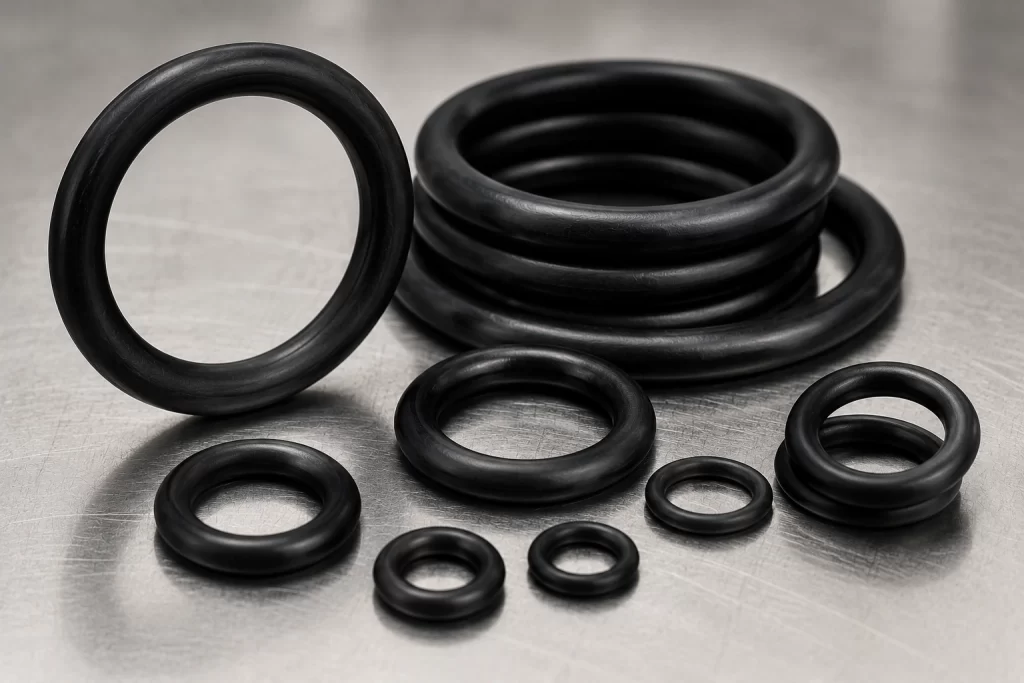
Viton® is a high-performance fluoroelastomer (FKM) material engineered for use in extreme environments where standard rubbear materials fail. It is specifically designed to withstand elevated temperatures, aggressive chemicals, fuels, and harsh environmental exposure.
Originally developed for aerospace and defense applications, Viton has become one of the most trusted sealing materials across industries such as automotive, oil & gas, chemical processing, and heavy manufacturing.
When operating conditions involve heat, hydrocarbons, acids, or prolonged chemical exposure, Viton O-rings are often the preferred choice.
What Is Viton Made Of?
Viton is a synthetic fluorocarbon elastomer. Its chemical structure contains high levels of fluorine, which gives it superior resistance to heat and chemical degradation.
This fluorinated composition provides:
Strong carbon-fluorine bonds
Low permeability to gases and fuels
Resistance to oxidative breakdown
High thermal stability
Because of these properties, Viton performs where conventional elastomers such as nitrile (NBR) or EPDM begin to deteriorate.
Temperature Performance of Viton O-Rings
One of the most important reasons Viton is selected is its ability to withstand sustained high temperatures.
Typical operating range:
| Property | Viton (FKM) |
| Minimum Temperature | -20°C (standard grade) |
| Maximum Continuous Temperature | 200–210°C |
| Short-Term Heat Exposure | Up to 230°C (grade dependent) |
In comparison, standard nitrile rubber typically operates up to only 100–120°C.
Viton maintains elasticity and compression resistance even under prolonged heat exposure. This reduces the risk of hardening, cracking, and seal failure.
However, Viton is not ideal for extremely low-temperature applications unless specialized formulations are used.
Chemical Resistance Capabilities
Viton is widely known for its exceptional chemical resistance. It performs reliably in environments where hydrocarbons, fuels, and aggressive solvents are present.
Viton O-rings are resistant to:
Petroleum oils
Diesel and gasoline fuels
Silicone fluids
Mineral oils
Aromatic hydrocarbons
Halogenated hydrocarbons
Many acids and industrial chemicals
Because of its low permeability, Viton also reduces fuel vapor leakage in automotive and fuel system applications.
However, it is important to note that Viton is not compatible with certain ketones, amines, or hot water/steam unless specific grades are selected.
Material compatibility should always be verified before final specification.
Environmental and Aging Resistance
Viton also performs well under environmental stress. It maintains sealing integrity even when exposed to:
UV radiation
Ozone
Oxidation
Weathering
Mold and fungal growth
Unlike some elastomers that degrade or crack over time when exposed to sunlight or ozone, Viton maintains stability.
This makes it suitable for outdoor industrial applications and engine compartments where heat and environmental exposure combine.
Mechanical Performance
Viton O-rings offer:
Good compression set resistance
Strong tensile strength
High durability in static and moderate dynamic systems
While nitrile may offer slightly better abrasion resistance in certain dynamic applications, Viton’s chemical and thermal superiority often outweighs this difference in demanding environments.
Where Is Viton Commonly Used?
Because of its high resistance properties, Viton is commonly found in industries that operate under extreme conditions.
Automotive systems use Viton O-rings in:
Fuel injectors
Engine seals
Transmission systems
Turbocharger assemblies
Oil and gas industries use Viton in:
Downhole tools
Pump seals
Refinery equipment
Fuel handling systems
Chemical processing facilities use Viton for:
Valves
Pumps
Gaskets
Pipe sealing systems
Aerospace applications rely on Viton for fuel and hydraulic sealing where temperature fluctuations are extreme.
Comparison: Viton vs Standard Rubber (Nitrile)
Understanding the differences helps clarify why Viton is selected for specialized applications.
| Property | Viton (FKM) | Nitrile (NBR) |
| High Temperature Resistance | Excellent | Moderate |
| Fuel Resistance | Excellent | Good |
| Chemical Resistance | Very High | Moderate |
| Low Temperature Flexibility | Moderate | Better |
| UV/Ozone Resistance | Excellent | Limited |
| Cost | Higher | Lower |
Nitrile is often chosen for cost-sensitive applications involving petroleum oils at moderate temperatures. Viton is chosen when temperature and chemical severity increase.
Limitations of Viton
Despite its advantages, Viton is not universally suitable.
It is generally not recommended for:
Extremely low temperature environments without special formulation
Prolonged exposure to hot water or steam (unless grade specific)
Applications requiring very high tear resistance in heavy dynamic systems
Additionally, Viton is more expensive than standard nitrile rubber. For non-demanding environments, nitrile may provide a more cost-effective solution.
Why Viton Is Considered a Premium Sealing Material
Viton is often referred to as a “high-performance elastomer” because it bridges the gap between general-purpose rubber and ultra-premium materials like FFKM.
It delivers:
High temperature durability
Excellent fuel resistance
Strong chemical compatibility
Long-term aging stability
This combination reduces maintenance frequency and improves long-term reliability in harsh industrial systems.
Final Thoughts
Viton is a high-performance fluoroelastomer designed for sealing applications in extreme temperature and chemically aggressive environments. It is widely used in automotive, oil and gas, chemical processing, and aerospace industries because it maintains integrity where conventional rubber materials fail.
While it carries a higher material cost, its durability in harsh conditions often reduces overall lifecycle expenses.
Selecting Viton O-rings should always be based on temperature range, chemical exposure, environmental conditions, and system pressure. When properly specified, Viton provides reliable sealing performance in some of the harshest operating environments.
Additionally, choosing the right o ring and seal material is essential to ensure durability, performance, and long-term reliability across different industrial applications.