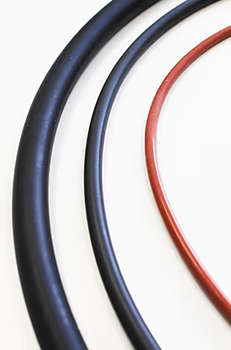
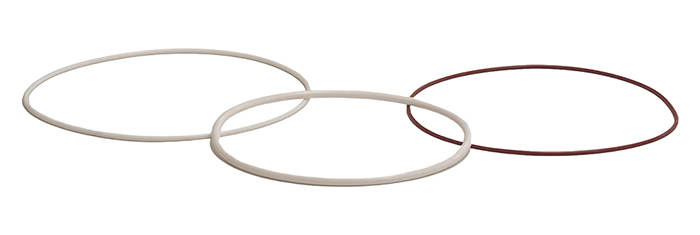
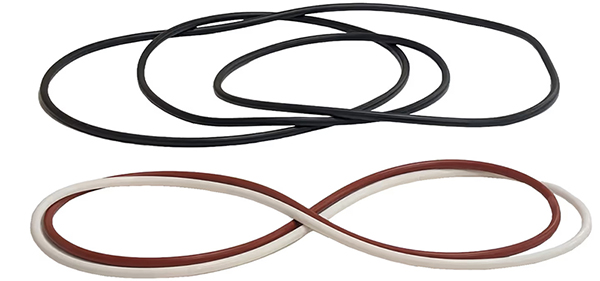
A vulcanised O-ring is a sealing ring made by joining the ends of an elastomer cord through a
controlled bonding process. Instead of relying on moulds, the ring is built to the exact
diameter required, making it a practical option when standard sizes are not available.
This method enables the production of rings of almost any diameter, from compact custom sizes to
very large rings used in tanks, lids, hatches, and industrial vessels. These rings work best in
static sealing setups where moulded options are either impractical or too costly to manufacture.
Available Material Options for Vulcanised O-Rings
The performance of a vulcanised ring depends heavily on the material chosen for the cord.
Each elastomer offers its own level of flexibility, temperature stability, and media
resistance, making it important to match the ring to the working environment.
We provide multiple elastomer options so industries can select the material that best
matches their application needs.
1. Viton O-Rings (FKM) 75/90 Sh A
A Viton O-ring is chosen when an application demands strong resistance to heat, chemicals,
and aggressive media. Its stability makes it a reliable option for harsh industrial
environments.
Key properties:
- Handles temperatures from -20°C to +200°C
- Strong resistance to oils, fuels, solvents, and chemicals
- Low gas permeability for stable sealing
- Performs well in high-vacuum conditions
- Good compression set resistance for long service life
Best suited for:
- Chemical processing equipment
- Petrochemical systems
- High-temperature pipelines
- Oil and gas sealing points
These rings are widely used in systems where consistent performance and long-term
reliability are essential.
2. Silicone O-Rings (VMQ) 70 sh A
A Silicone O-ring is used when an application requires clean, flexible, and
temperature-stable sealing. Its purity and softness make it ideal for environments where
hygiene and consistency matter.
Key properties:
- Works reliably from -40°C to +200°C
- Highly flexible, even at low temperatures
- Available in FDA and food-grade variants
- Odourless and chemically neutral
- Excellent aging and weather resistance
Best suited for:
- Food and beverage equipment
- Pharmaceutical and biotech systems
- Medical devices
- Water purification setups
These rings are preferred in applications that demand gentle sealing without compromising
cleanliness or performance.
3. EPDM O-Rings 70 Sh A
An EPDM O-ring is selected for applications involving water, steam, or outdoor exposure. Its
strong resistance to weathering makes it a dependable choice for long-term sealing.
Key properties:
- Temperature range: -20°C to +150°C
- Excellent resistance to water and steam
- Strong UV and ozone stability
- Not suitable for oils or fuel-based media
- Good overall durability in harsh outdoor conditions
Best suited for:
- Water treatment systems
- Steam lines and boilers
- HVAC equipment
- Outdoor sealing applications
These rings are often chosen for systems that are exposed to continuous moisture, heat, or
other environmental conditions.
4. Nitrile O-Rings (NBR) 70/ 80 / 90 Sh A
A Nitrile O-ring is a practical and economical choice for systems that operate with
petroleum-based oils. Its strong mechanical properties make it suitable for everyday
industrial use.
Key properties:
- Temperature range: -30°C to +90°C
- Good resistance to petroleum oils and lubricants
- Strong mechanical strength and abrasion resistance
- Reliable performance in general hydraulic systems
- Cost-effective for large-volume applications
Best suited for:
- Hydraulic equipment
- Pneumatic tools
- Lubricated machinery
- General industrial sealing
These rings are commonly used in equipment that requires dependable sealing at a low cost.
5. HNBR 70/90 Sh A
A synthetic polymer that results from the hydrogenation of Nitrile rubber (NBR). This gives
it superior mechanical characteristics, particularly high strength, greater thermal
stability and helps reduce extrusion and wear. It can be used where temperatures are too
high for standard Nitrile (NBR).
Key properties:
- Temperature range: -40°C to +165°C
- Excellent resistance to petroleum oils, chemical, ozone and abrasion
- Higher mechanical strength and flexibility
- Reliable performance in long term demanding application
Best suited for:
- Automotive
- Oil & Gas drilling
- Hydraulic systems
- General industrial sealing
We guide customers in selecting the right material by considering factors such as media
compatibility, pressure levels, temperature range, and any applicable regulatory standards.
How Vulcanised O-Rings Are Manufactured
Vulcanised O-rings follow a precise manufacturing flow to ensure durability and accurate
sealing. Each stage is handled carefully to maintain consistency and performance.
-
Material Selection
The right elastomer is chosen based on temperature, chemical, and pressure needs.
Hardness between Shore A 50–90 is selected to match the required sealing performance.
-
Precision Cord Cutting
The cord length is calculated using:
L = π × (D - d)
This formula ensures the cord fits perfectly, with no gaps. Proper cutting prevents
stress or stretching in the final O-ring.
-
Joint Preparation
The cord ends are 45° scarf cut, depending on the joint design. This helps create a
smooth, strong bond area.
-
Bonding
A high-performance adhesive is applied to the prepared ends. It ensures proper
alignment, so the O-ring maintains its original round shape.
-
Vulcanising
The joint is bonded under controlled heat and pressure. This forms a durable vulcanised
connection that can handle demanding conditions.
-
Curing
The O-ring is cured to stabilise the material structure. This step ensures uniform
mechanical properties and long-lasting sealing performance.
-
Quality Inspection
The final O-ring is checked for bond strength, dimensions, hardness, and surface finish.
Every piece is inspected to ensure it meets quality standards.
The complete process ensures that the O-rings perform reliably in various applications. It
also helps maintain consistent quality for every batch produced.
Joint Types We Offer
We offer multiple bonding styles based on the application and the required sealing
performance. Each joint type delivers a different level of strength and suitability for
industrial conditions.
-
1. Scarf Joint (Recommended)
This joint uses an angled cut that increases the bonding surface. It ensures better grip
and stability, making it ideal for dependable static sealing.
-
2. Butt Joint
A straight cut bonds both ends directly. It is suitable for low-pressure static
environments with minimal joint stress.
-
3. Overlap Joint
One end overlaps the other before bonding. It is used only in special cases where the
design requires this structure.
-
4. Moulded Joint (Premium Option)
A fully moulded joint that offers the highest bond strength. It is preferred for
critical or demanding applications that need maximum reliability.
With these joint types available, selecting the right option ensures better sealing
performance and longer service life.
What Makes Vulcanised O-Rings Advantageous
Vulcanised O-rings are widely chosen because they offer design freedom that standard moulded
rings cannot provide. They support industries that need custom sizes, quick supply, and
dependable sealing in static operations.
-
Manufactured in any diameter
These rings can be produced in small, medium, or extremely large sizes. It helps meet
special sealing dimensions without mould constraints.
-
Quick turnaround times
The vulcanising process is fast and controlled. This allows rapid supply for teams
working with tight maintenance schedules.
-
Cost-effective compared to moulded options
No dedicated moulds are required for production. This lowers the overall cost for
non-standard or low-volume requirements.
-
Ideal for oversized equipment
They perform well in large units such as tanks, manways, reactors, and industrial
covers. The joint stays stable even at large circumferences.
-
Multiple cross-section choices
Different cord profiles can be selected based on the groove design. It helps achieve a
better fit and improved sealing performance.
-
Strong sealing for static environments
They are designed to deliver consistent sealing in non-moving applications. The bonded
joint is tested to ensure reliability.
-
Resistant to chemicals and temperature variations
Materials like Viton O-ring and Silicone O-ring provide strong resistance to heat, oils,
and aggressive chemicals. This supports long-term service life in demanding conditions.
-
Available in grades for regulated industries
Special elastomer types meet FDA, pharmaceutical, and cleanroom requirements. These
grades ensure safe use in sensitive environments.
These advantages make vulcanised O-rings a practical solution for industries needing
customised sealing. Their adaptability helps maintain performance even in challenging
operating conditions.
Constraints of Vulcanised O-Rings
While vulcanised O-rings offer many benefits, they also have certain limitations that users
should consider. Understanding these drawbacks helps in choosing the right sealing option
for each application.
-
Not ideal for high dynamic motion:
These rings are designed mainly for static use. Continuous movement can affect joint
stability over time.
-
Joint may be weaker than a moulded O-ring:
The bonded section is the most sensitive point. It may not match the uniform strength of
a fully moulded ring.
-
Not suitable for high-pressure pulsating environments:
Frequent pressure spikes can put stress on the joint. This reduces sealing efficiency
and overall service life.
-
Not recommended for rotary equipment:
Rotational movement creates friction and heat. This can cause premature failure in
vulcanised joints.
Knowing these limitations helps ensure the right O-ring type is selected for long-term
reliability. Choosing the proper seal prevents downtime and improves equipment performance.
Where These O-Rings Perform Best
Large diameter O-rings produced through vulcanisation are widely used in static sealing
applications where standard moulded rings are unavailable. Vulcanised O-rings are chosen for
a wide range of static sealing tasks across industrial environments. Their ability to match
large diameters and custom sizes makes them suitable for both standard and specialised
equipment.
They are commonly used in areas such as:
1. Process & Storage Equipment
- Tank lids
- Manways
- Large industrial vessels
- Marine hatch covers
2. Fluid & Chemical Handling
- Filtration systems
- Chemical lines
- Solvent pipelines
- Water treatment units
3. Hygiene-Critical Industries
- Food and beverage machinery
- Pharmaceutical processing equipment
4. Technical & Mechanical Systems
- HVAC and refrigeration units
- Vacuum chambers
- Industrial mixers and reactors
From small enclosures to oversized assemblies, these applications highlight the adaptability
of vulcanised O-rings. Their flexibility in diameter and material choice ensures consistent
sealing performance across different industrial setups.
Cross-Section Sizes Offered (Cord Diameters)
Choosing the right cord diameter ensures that a vulcanised O-ring fits securely in its
groove and delivers reliable sealing. To support different industrial setups, a wide range
of standard sizes is available.
Standard cord diameters:
- 1.8 mm
- 2.0 mm
- 2.5 mm
- 3.0 mm
- 3.5 mm
- 4.0 mm
- 5.0 mm
- 6.0 mm
- 8.0 mm
- 10.0 mm
- 12.0 mm
- 13.0 mm
- 14.0 mm
- 15.0 mm
- 16.0 mm
- 18.0 mm
- 20.0 mm
If you need a specific or uncommon size, custom diameters are available on request. This
ensures the O-ring matches your exact sealing profile without compromising performance.
Key Technical Parameters
Every vulcanised O-ring is manufactured to meet strict industrial standards, ensuring
consistent performance across different sealing conditions. These specifications support
reliability, accuracy, and long-term durability in static applications.
These are the core technical details we maintain:
- Hardness range: 70–90 Shore A
- Temperature resistance: varies by material type
- Dimensional tolerance: ISO tolerance standards
- Bond strength: verified using ASTM test methods
- Compression set: measured as per ASTM D395
- Material certification: available upon request
These controlled parameters help each ring deliver stable sealing, even under pressure
changes, chemical media, or temperature fluctuations. Vulcanised large diameter O-rings
offer a reliable, cost-effective sealing solution for industries requiring oversized,
custom-built seals.
Comparison: Vulcanised O-Rings vs Moulded O-Rings
Choosing the right sealing option becomes easier when you understand how both solutions
differ in performance and design. This comparison highlights the practical differences
between vulcanised O-rings and moulded O-rings for everyday industrial use.
| Parameter |
Vulcanised O-Rings |
Moulded O-Rings |
| Cost |
Low cost; ideal when you need a quick, affordable sealing solution. |
Higher cost due to moulding tools and production processes. |
| Available Size |
It can be produced in any diameter, including very large sizes. |
Limited to existing mould sizes and tool availability. |
| Joint Strength |
Moderate strength because of the bonded joint. Suitable for static setups.
|
High strength with a seamless design, offering better durability. |
| High-Pressure Handling |
Not ideal for high or pulsating pressure conditions. |
Excellent performance in high-pressure and demanding environments. |
| Lead Time |
Very fast production, even for oversized rings. |
Longer timelines due to tooling and moulding requirements. |
| Applications |
Best for static sealing and large custom assemblies. |
Works well in both static and dynamic applications. |
Recommended Installation Steps
Installing a vulcanised O-ring the right way helps the seal work efficiently and last
longer. Even small mistakes during fitting can affect its performance.
Follow the steps below to keep the installation simple and problem-free:
-
1. Clean the groove:
Clear out dust, residue, or traces of old seal so the O-ring sits evenly without
obstruction.
-
2. Avoid twisting the ring:
Place it gently into the groove to keep its shape uniform and avoid uneven compression.
-
3. Do not stretch over sharp edges:
Sharp corners can tear the material or weaken the joint during fitting.
-
4. Apply a suitable lubricant:
A compatible grease reduces friction, allowing the ring to slide into place without
stress.
-
5. Keep the joint in a static zone:
Position the bonded section where there is minimal movement or pressure change.
-
6. Avoid the sealing path:
Make sure the joint does not sit in the primary compression area to maintain consistent
sealing.
These steps help extend the ring’s life and support long-term sealing accuracy. A careful
installation always leads to a more stable and reliable seal.
Industries That Trust Our Solutions
Many industries rely on vulcanised O-rings for dependable sealing and long-term performance.
Their durability and compatibility make them suitable for a wide range of applications. Here
are the key sectors where they are commonly used:
- 1. Pharma
- 2. Food & Beverage
- 3. Chemical Processing
- 4. Water Treatment
- 5. Marine
- 6. Oil & Gas
- 7. Automotive
- 8. HVAC
- 9. Packaging
- 10. General Industrial Manufacturing
These industries demonstrate the versatility of vulcanised O-rings across diverse
environments. Their consistent performance makes them a trusted choice for critical
operations.
Your Order Input Checklist
Placing an order becomes much easier when all required details are shared from the
beginning. It helps us accurately match your O-ring requirements and avoid back-and-forth.
Use the checklist below to make sure your vulcanised O-rings are manufactured to the exact
specification you need:
-
Inside diameter (ID) or circumference
This tells us the exact size the O-ring must fit into.
-
Cord diameter (CS)
The cord thickness helps determine how well the seal will perform.
-
Material (Viton, Silicone, EPDM, NBR, etc.)
The right material ensures the O-ring can handle your operating conditions.
-
Shore hardness
Hardness defines how firm or flexible the ring should be for your application.
-
Quantity
Help us plan production and deliver within your timeline.
-
Application details (temperature, media, pressure)
These conditions guide material choice and confirm performance suitability.
-
Technical drawings
Drawings remove any confusion and ensure complete dimensional accuracy.
Sharing clear details speeds up the process and ensures every O-ring is made exactly as
required. It also helps deliver a product that performs well and remains reliable over the
long term.
What Sets KAF Apart
Choosing the right supplier makes a major difference in O-ring performance and reliability.
Our team ensures every order meets precise industrial standards and delivers long-term
value. Here’s why many industries trust us:
-
Official distributor of Vulcan Engineering (UK & USA)
This gives you access to globally trusted vulcanised O-rings with certified quality.
-
High-quality joint bonding
Each joint is bonded with accuracy to ensure consistent sealing performance.
-
Fast delivery and custom manufacturing
We support urgent requirements with quick production and made-to-size options.
-
FDA, food-grade, USP VI, EC1935/2004 options
Materials are available for regulated industries that require strict compliance.
-
Technical material selection support
Our team helps you choose the right elastomer for temperature, media, and pressure
needs.
-
In-house sealing experts
Specialists are available to guide design, troubleshooting, and application matching.
-
Proven performance across 20+ industrial sectors
Our vulcanised O-rings are widely used in demanding environments, delivering reliable
results.
Working with us ensures you get accuracy, support, and a product that performs well in your
application. Every O-ring is made with care so you can install it confidently and focus on
your operations.