
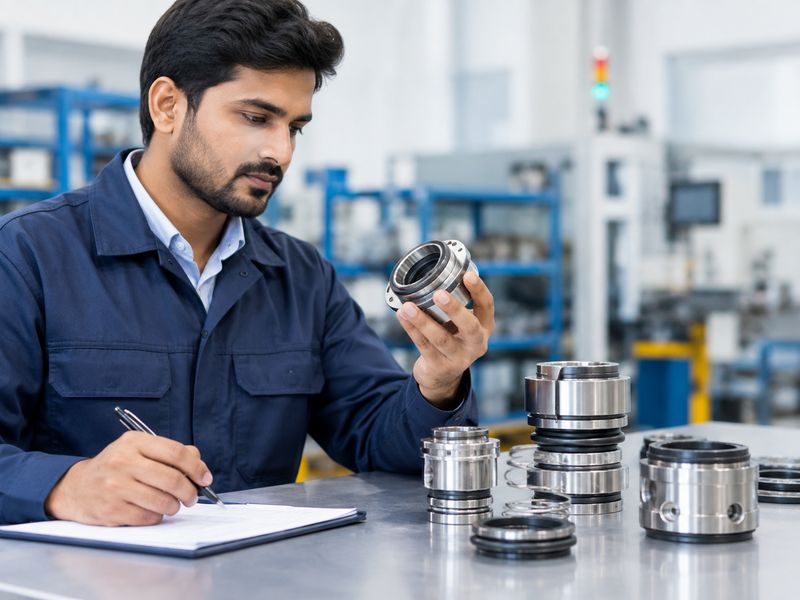
Choosing a mechanical seal manufacturer is not only about comparing prices. The right supplier should understand the equipment, process conditions, seal design, and service needs. A poor match can lead to leakage, premature wear, repeated shutdowns, and higher maintenance costs.
For plant teams, the decision becomes more important when equipment handles high pressure, temperature changes, aggressive media, or continuous operation. The supplier should be able to discuss these conditions before recommending a seal.
An industrial mechanical seal must match the equipment and its operating environment. Kaf Vulcan supports industrial sealing requirements with an engineering-led approach and access to sealing solutions for different applications.
The goal is simple: select a supplier that can provide the right technical solution, not just a product.
What Should You Check Before Choosing a Mechanical Seal Manufacturer?
A reliable supplier should be able to answer practical questions about the application.
Before shortlisting mechanical seal manufacturers in India, check whether they can support:
- Equipment and pump details
- Operating temperature and pressure
- Process media
- Shaft speed
- Seal size and arrangement
- Face and elastomer materials
- Installation requirements
- Replacement and maintenance needs
A supplier that asks these questions is more likely to understand the actual sealing requirement.
Why Does Mechanical Seal Experience Matter?
Mechanical seals are used across many types of equipment. The sealing needs of a chemical pump can differ from those of a food processing system or water treatment unit.
Understanding mechanical seal applications helps a supplier recommend a suitable design rather than relying on a standard option.
For example, the seal may need to handle:
- Corrosive process fluids
- High or changing temperatures
- Abrasive media
- High shaft speeds
- Frequent start-stop cycles
- Clean or hygienic processes
- Continuous industrial operation
Experience with different mechanical seal applications can help identify these differences early.
How Can You Compare Mechanical Seal Suppliers?
Price is useful, but it should not be the only comparison point.
A technical buyer can review suppliers using a few practical factors:
| Factor | What To Check |
| Product range | Does the supplier offer suitable seal designs? |
| Technical support | Can they review operating conditions? |
| Customization | Can they provide custom mechanical seals when required? |
| Material options | Are suitable face and elastomer materials available? |
| Application knowledge | Do they understand the equipment and process? |
| Documentation | Can they provide relevant product information? |
| After-sales support | Is technical help available after supply? |
This approach makes supplier evaluation more useful than comparing quotations alone.
When Are Custom Mechanical Seals Worth Considering?
Standard seals can suit many common requirements. However, some equipment has unusual dimensions, limited installation space, or specific process conditions.
In such cases, custom mechanical seals may provide a better fit for the equipment.
Custom solutions may be considered when there are:
- Non-standard shaft sizes
- Special chamber dimensions
- Space limitations
- Unusual operating conditions
- Existing equipment with limited design changes
- Specific material requirements
The need for custom mechanical seals should be confirmed through application details. Customization is not automatically better. The design still needs to suit the equipment and service conditions.
What Should a Good Mechanical Seal Selection Process Include?
Good mechanical seal selection starts with the operating conditions.
The supplier should first understand the equipment and then review the sealing points.
A basic selection process includes:
- Identifythe equipment
Confirm the pump, mixer, agitator, reactor, or other machine where the seal will be fitted. - Record operating conditions
Temperature, pressure, shaft speed, and process fluid should be clearly defined. - Review the seal arrangement
The required design depends on the equipment and available installation space. - Select suitable materials
Seal faces, elastomers, springs, and other components must suit the service conditions. - Check installation details
Dimensions, shaft condition, gland arrangement, and fitting method should be reviewed.
This makes mechanical seal selection a technical exercise rather than a simple catalogue choice.
Why Is Material Compatibility Important?
Seal materials come into direct or indirect contact with the process environment. Their compatibility can affect service life and sealing performance.
An industrial mechanical seal may include different material combinations depending on the application. Seal faces and elastomers should be selected according to temperature, pressure, fluid, and movement.
For example, the material choice for a water service may differ from one used in chemical processing.
This is why mechanical seal selection should consider the complete material combination instead of focusing on one component.
Where compliance is required, the exact product specification and applicable standard should also be verified before purchase.
How Does Application Support Add Value?
A mechanical seal supplier should do more than send a product number.
Good technical support can help maintenance and engineering teams identify the information needed for selection. It can also help when an existing seal has failed repeatedly.
Useful questions include:
- Where is the leakage occurring?
- Has the seal failed at the faces or elastomer?
- Is the shaft damaged?
- Has the process temperature changed?
- Has the pump alignment been checked?
- Is the seal being installed correctly?
- Has the process fluid changed?
These details can help explain why a replacement seal may not solve a recurring problem.
What Red Flags Should Buyers Watch For?
Not every low-cost option is suitable for industrial service.
Buyers should be cautious when a supplier:
- Recommends a seal without asking about operating conditions
- Cannot explain material selection
- Offers no dimensional confirmation
- Makes broad performance claims
- Avoids discussing installation
- Cannot provide relevant technical information
- Treats every application as the same
The best mechanical seal manufacturers in India should be able to discuss the technical basis for their recommendation.
How Can You Make the Final Supplier Decision?
The final choice should balance product suitability, technical support, quality, and supply requirements.
For mechanical seal applications, the supplier should be able to understand the equipment before suggesting a solution. They should also be clear about material choices and operating limits.
When custom mechanical seals are required, the supplier should review drawings or dimensions and confirm the design before production.
For buyers comparing mechanical seal manufacturers in India, technical communication is a useful sign of supplier capability. A clear discussion at the beginning can prevent avoidable issues later.
Trust A Supplier That Understands the Application
The right supplier is one that treats mechanical seal selection as an engineering decision. Product range matters, but so do application knowledge, material understanding, dimensions, installation, and service conditions.
An industrial mechanical seal should always be specified according to the equipment and process rather than selected only by price or appearance.
Kaf Vulcan provides industrial sealing solutions for a range of process and equipment requirements. They focus on application-based solutions and support customers in assessing suitable sealing options. Their product range and technical approach can help plant teams evaluate requirements for standard and custom mechanical seals.
For businesses looking for mechanical seal manufacturers in India, they can discuss the application, review the sealing requirement, and provide a suitable quotation.