
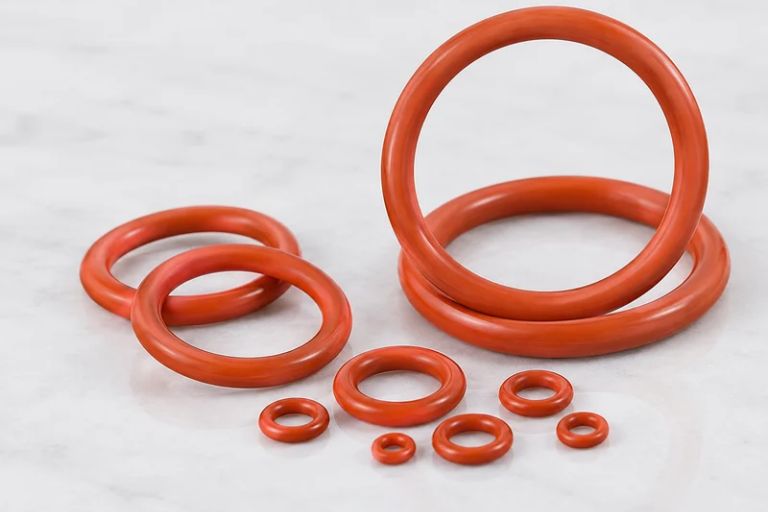
Silicone O-rings are widely recognized for their exceptional temperature stability, flexibility, and environmental resistance. While the basic O-ring design has remained unchanged for decades, the evolution of silicone elastomers has significantly expanded sealing capabilities across modern industries.
From medical devices to aerospace systems, silicone O-rings have become a preferred sealing material where temperature extremes, regulatory compliance, and aging resistance are critical.
However, selecting silicone blindly without understanding its strengths and limitations can lead to poor performance. Before specifying silicone for your application, it is essential to understand four key facts that define how and where silicone O-rings perform best.
1. Silicone Offers One of the Widest Working Temperature Ranges
Temperature is one of the most destructive forces acting on elastomers. Excessive heat causes hardening, while extreme cold leads to brittleness. Silicone performs exceptionally well at both ends of the spectrum.
Typical working range:
| Property | Silicone O-Rings |
| Minimum Temperature | -60°C (and lower with special grades) |
| Maximum Continuous Temperature | 200–230°C |
| Short-Term Heat Exposure | Up to 300°C (grade dependent) |
This wide operating window makes silicone ideal for applications involving thermal cycling. It retains flexibility even at low temperatures where many conventional rubbers fail. At elevated temperatures, silicone maintains structural integrity without significant cracking or hardening.
In comparison, standard nitrile rubber typically operates only between -30°C to 100–120°C.
This thermal stability makes silicone particularly valuable in:
High-temperature enclosures
Electronics exposed to heat
Outdoor industrial systems
Medical sterilization equipment
However, while silicone tolerates heat well, it should not automatically be chosen for fuel or petroleum-based environments, which require different materials.
2. Silicone Comes in Multiple Formulations for Specific Performance Needs
Not all silicone O-rings are the same. Silicone can be engineered into various types to meet specific environmental and mechanical demands.
The most common classifications include:
| Silicone Type | ASTM Designation | Primary Benefit |
| Dimethyl Silicone | VMQ | General-purpose silicone |
| Phenyl Silicone | PVMQ | Improved low-temperature performance |
| Fluorosilicone | FVMQ | Enhanced fuel and oil resistance |
| Liquid Silicone Rubber | VMQ | Precision molding and medical-grade parts |
Dimethyl silicone (VMQ) is the most commonly used type for general sealing.
Phenyl silicone improves low-temperature flexibility even further, making it suitable for aerospace or cold-weather applications.
Fluorosilicone bridges the gap between silicone’s temperature advantages and the oil resistance typically associated with FKM materials.
Liquid Silicone Rubber (LSR) is used when high-precision molding is required, especially in medical and electronic components.
Beyond type variations, silicone can also be manufactured through different processing methods, such as compression molding or injection molding, depending on design complexity and tolerances.
3. Silicone Can Be Engineered to Meet Specialized Requirements
One of silicone’s strongest advantages is its adaptability. Silicone compounds can be customized to meet specific regulatory, environmental, or mechanical requirements.
Silicone can be formulated to:
Meet FDA and medical compliance
Resist microbial growth
Provide electrical insulation or conductivity
Operate in extreme cold
Handle continuous heat
Be produced in translucent or specialty colors
Resist UV and ozone degradation
Because silicone does not degrade easily under UV exposure, it performs well in outdoor applications. Unlike many organic rubbers, it does not crack or lose elasticity due to environmental aging.
Silicone also offers superior electrical insulation properties. For this reason, it is widely used in electronic enclosures and electrical connectors where moisture protection is required.
However, despite its versatility, silicone has moderate tear strength and lower abrasion resistance compared to some other elastomers. In high-friction or dynamic systems, other materials may provide better durability.
4. Silicone Is Highly Suitable for Medical and Sanitary Applications
Silicone’s biocompatibility and non-toxic nature have made it one of the most trusted materials in the medical and pharmaceutical industries.
Medical-grade silicone O-rings are commonly used in:
- Ventilators
- Medical pumps
- IV systems
- Implantable devices
- Feeding and fluid delivery systems
- Sterilization equipment
Silicone withstands repeated autoclave cycles without significant degradation. It does not release harmful substances under heat exposure, making it safe for direct and indirect contact applications.
Its flexibility also supports microminiature sealing components in compact medical devices where precision is essential.
In addition to medical systems, food processing industries also rely on silicone O-rings for hygienic sealing applications.
Strengths and Limitations at a Glance
To fully understand silicone O-rings, it is important to view them alongside other common materials.
| Property | Silicone | NBR | FKM |
| High Temperature Resistance | Excellent | Moderate | Excellent |
| Low Temperature Flexibility | Excellent | Limited | Good |
| Fuel Resistance | Poor | Good | Excellent |
| UV/Ozone Resistance | Excellent | Moderate | Good |
| Tear Strength | Moderate | High | High |
| Abrasion Resistance | Moderate | High | High |
Silicone excels in temperature and environmental resistance. However, it is not recommended for continuous fuel exposure or aggressive dynamic applications.
When Silicone O-Rings Are the Right Choice
Silicone O-rings are ideal when:
- Wide temperature range is required
- Environmental aging resistance is important
- Electrical insulation is needed
- Medical or food compliance is necessary
- The application is static or lightly dynamic
They may not be suitable when:
- Exposure to fuels or petroleum is present
- High mechanical wear occurs
- High-pressure dynamic sealing is required
Material selection must always consider chemical compatibility, compression requirements, mechanical stress, and temperature exposure.
Final Thoughts
Silicone O-rings remain one of the most versatile sealing materials available today. Their wide temperature range, environmental stability, and regulatory adaptability make them indispensable in industries ranging from aerospace to medical manufacturing.
However, no elastomer is universally superior. Silicone must be selected based on application demands rather than general performance claims, especially when choosing the right o ring and seal solution.
When applied correctly, silicone O-rings provide long-lasting, reliable sealing performance in conditions where many traditional rubber materials would fail.