
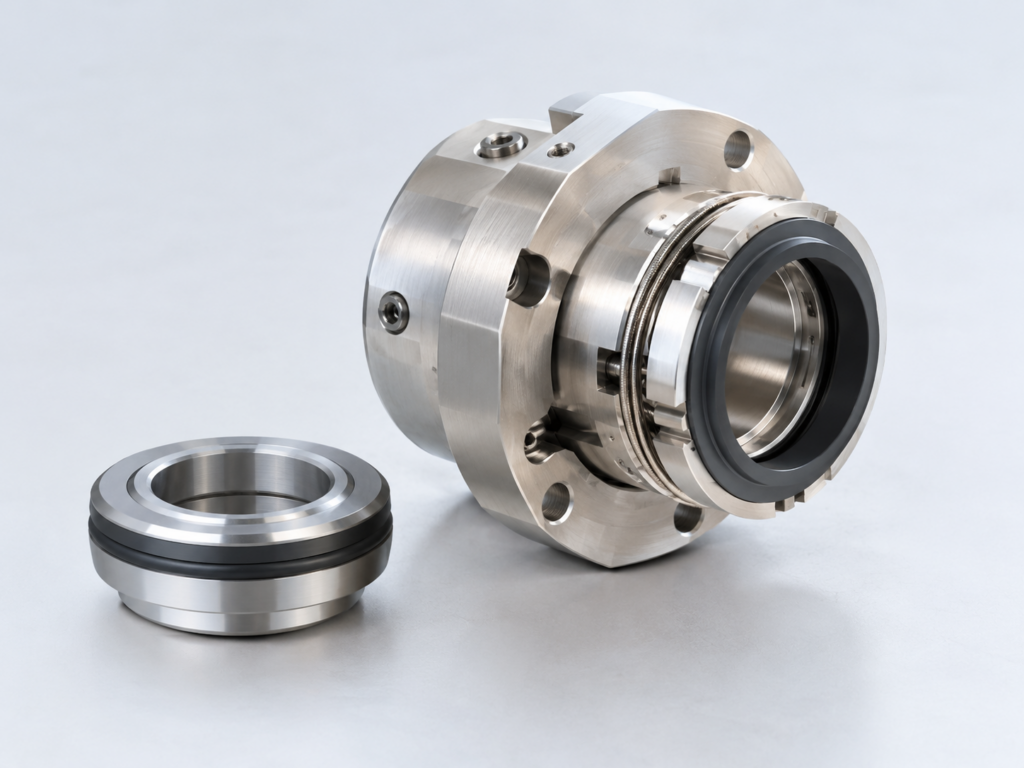
Mechanical seals are used in pumps and other rotating equipment to control fluid leakage around a shaft. But fitting a conventional seal can take time. It may also require careful setting of springs, seal faces, and other parts.
cartridge mechanical seals simplify this work by placing the main seal parts in a pre-assembled unit. This can make fitting more controlled and reduce the risk of incorrect component positioning.
For plant maintenance teams, the choice of seal depends on the pump design, fluid, pressure, temperature, shaft speed, and available space. Kaf Vulcan supplies engineered sealing solutions for industrial equipment where correct seal selection and fitting are important.
What Is a Cartridge Mechanical Seal?
A cartridge mechanical seal is a pre-assembled mechanical seal unit. Its main components are set in the correct position before the seal reaches the installation stage.
A typical cartridge unit may include:
- Rotating and stationary seal faces
- Springs or another loading system
- Secondary seals
- Gland components
- Setting clips or spacers
- Shaft sleeve, depending on the design
With cartridge mechanical seals, the installer does not need to set each major component separately on the pump shaft.
This is one reason cartridge designs are widely considered for industrial pump applications.
How Do Cartridge Mechanical Seals Work?
The basic sealing principle remains similar to other mechanical seals.
Two very flat faces are held together around the rotating shaft. One face rotates with the shaft, while the other remains stationary. A controlled closing force keeps the faces in contact.
A thin fluid film between the faces helps reduce wear during operation.
The cartridge design does not change this basic principle. Instead, it packages the sealing components into a unit that is easier to position and install.
What Are the Main Cartridge Seal Benefits?
The design offers several practical advantages for maintenance teams.
The main cartridge seal benefits include:
- Faster installation
- Pre-set seal components
- Reduced fitting errors
- Easier replacement
- Less manual setting work
- Consistent positioning of seal parts
- Suitable options for many industrial pumps
These cartridge seal benefits can be especially useful where pumps are regularly serviced or where maintenance time needs to be controlled. However, the correct seal must still be selected for the application.
What Is The Common Cartridge Mechanical Seal Types?
There are different cartridge mechanical seal types because pumps and process conditions vary.
Some cartridge designs are intended for single-seal arrangements. Others are designed for double-seal applications where a barrier or buffer fluid is used.
The main differences can relate to:
- Seal arrangement
- Face materials
- Secondary seal material
- Spring arrangement
- Pressure conditions
- Shaft size
- Equipment design
Choosing between different cartridge mechanical seal types requires an understanding of the pump and the process fluid.
Where Are Cartridge Seals Commonly Used?
Cartridge mechanical seals can be used across many industrial sectors.
Typical applications include:
- Chemical process pumps
- Water treatment pumps
- Food processing equipment
- Pharmaceutical machinery
- Cooling and circulation systems
- Oil and gas equipment
- General process pumps
The seal material must match the fluid and operating conditions. A seal suitable for water service may not be suitable for an aggressive chemical process.
For this reason, technical selection should come before purchasing.
When Is an OEM Mechanical Seal Preferred?
An OEM mechanical seal is designed to match the requirements of original equipment or a specific pump arrangement.
OEM specifications can cover details such as:
- Shaft diameter
- Seal chamber dimensions
- Working pressure
- Operating temperature
- Rotational speed
- Seal face arrangement
- Material combination
An OEM mechanical seal can be useful where the pump manufacturer has specified a particular sealing arrangement.
However, replacement selection should still confirm that the proposed seal matches the actual equipment and operating conditions.
How To Prepare for Mechanical Seal Installation
Good preparation makes mechanical seal installation easier and safer.
Before fitting a cartridge unit, the maintenance team should:
- Stop and isolate the equipment.
- Drain and depressurise the pump.
- Check the shaft and seal chamber.
- Remove dirt and deposits from sealing surfaces.
- Check the shaft for damage or excessive wear.
- Confirm the replacement seal matches the pump.
- Review the manufacturer’s fitting instructions.
The equipment should be in a safe condition before mechanical seal installation begins.
Cartridge Mechanical Seal Installation Steps
The exact procedure depends on the pump and seal design. The manufacturer’s instructions should always take priority.
A typical cartridge mechanical seal installation involves the following steps:
- Check The Seal
Inspect the cartridge before fitting. Look for visible damage and confirm the dimensions and materials.
- Prepare The Shaft
Clean the shaft and check that there are no sharp edges, burrs, or heavy wear that could damage secondary seals.
- Position The Cartridge
Slide the cartridge assembly onto the shaft carefully. Avoid forcing the unit into position.
- Secure The Gland
Position the gland correctly against the seal chamber and tighten the fasteners evenly.
- Lock The Setting Device
Many cartridge designs use clips or other setting features to maintain the correct seal position during fitting.
- Complete The Installation
Once the cartridge is correctly secured, follow the manufacturer’s instructions for removing setting devices and completing the pump assembly.
Careful cartridge mechanical seal installation helps maintain the designed position of the sealing faces.
What Should Be Checked After Fitting?
After mechanical seal installation, the pump should be checked before being returned to normal service.
Maintenance teams should verify:
- Correct shaft rotation
- Proper connections
- Correct pump alignment
- Absence of unusual noise or vibration
- Suitable process conditions
- No unexpected leakage during start-up
If a problem occurs, the pump should be stopped and inspected rather than allowing it to continue operating.
Choosing The Right Cartridge Seal
The right seal depends on the equipment and process. Cartridge mechanical seals can make fitting easier, but they still need correct sizing and material selection. Understanding the available cartridge mechanical seal types also helps engineers select the right arrangement.
The cartridge seal benefits are most useful when the seal is correctly matched to the pump. An OEM mechanical seal may be appropriate where the original equipment design calls for a specific arrangement. Proper cartridge mechanical seal installation then helps ensure the unit is positioned as intended.
Kaf Vulcan provides engineered sealing solutions for industrial applications. They support customers with mechanical seal selection based on equipment design and operating conditions. Their range includes cartridge designs and other sealing products for process industries. Businesses can contact Kaf Vulcan to discuss an application, request technical guidance, or enquire about a suitable sealing solution.