
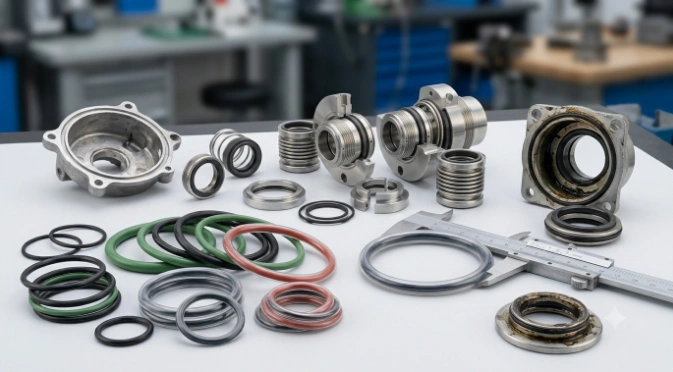
Every industrial system has one thing in common. It needs to prevent leaks. Whether it is a chemical pump, a pharmaceutical reactor, or a food processing line, the right O ring and seal is what keeps the system running safely and efficiently.
This guide covers everything you need to know about O ring and seal types, materials, applications, and how to choose the right one for your equipment.
What Is an O Ring and Seal?
An O ring is a circular loop made from an elastomer or polymer material. It sits inside a groove between two mating surfaces and creates a seal when compressed.
A seal is a broader term. It refers to any component that prevents fluid or gas from escaping a system. An O ring is one of the most widely used types of seal in industrial applications.
Together, the O ring and seal category covers a wide range of products used across pumps, valves, compressors, reactors, and pipelines.
Why O Rings and Seals Matter in Industry
A failed O ring and seal can cause serious problems. Leaks lead to production stops, safety risks, contamination, and costly repairs.
Choosing the right O ring and seal from the start reduces maintenance frequency, lowers downtime, and extends equipment life.
For procurement teams, it also means fewer emergency orders and more predictable maintenance schedules.
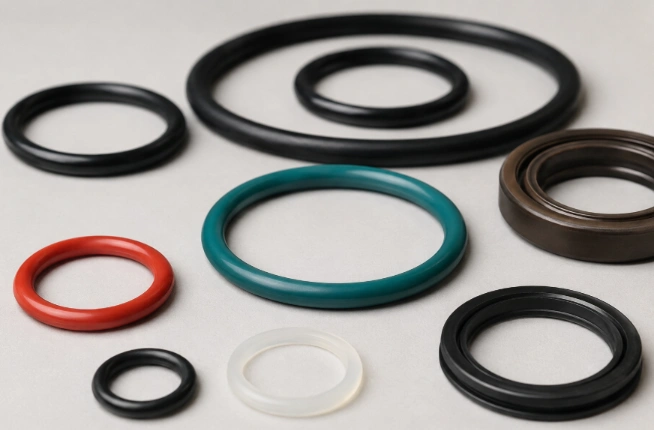
Common Types of O Rings and Seals
Different applications need different sealing solutions. Here are the most widely used types.
Standard Elastomer O Rings Made from rubber compounds such as NBR, EPDM, or Viton. Used in general industrial applications where chemical and temperature conditions are moderate. Easy to source and cost-effective.
PTFE Encapsulated O Rings These have a PTFE or FEP outer shell with a silicone or Viton inner core. The outer layer provides strong chemical resistance while the inner core maintains flexibility. Used in chemical processing, pharmaceutical, and food applications where standard rubber would fail.
Viton O Rings Made from fluoroelastomer (FKM). Excellent resistance to heat, fuels, and aggressive chemicals. A preferred O ring and seal choice for oil and gas, automotive, and chemical industries.
Silicone O Rings Known for wide temperature range performance. Used in food, beverage, medical, and clean environments. Not suited for petroleum-based fluids.
FFKM O Rings Perfluoroelastomer seals with the highest chemical and temperature resistance available. Used in semiconductor, pharmaceutical, and critical process applications where no other material performs.
Mechanical Seals Used in rotating equipment such as pumps, mixers, and compressors. A mechanical seal prevents leakage along a rotating shaft. It replaces traditional gland packing in many modern systems.
PTFE Envelope Gaskets Flat seals used in flange connections. PTFE envelope gasket surrounds a soft inner filler, combining chemical resistance with reliable sealing on flanged pipework.
O Ring and Seal Materials: How to Choose
Material selection is the most critical part of choosing an O ring and seal. The wrong material leads to swelling, hardening, cracking, or complete seal failure.
Key factors to consider:
Process fluid — the seal material must be chemically compatible with the fluid it contacts. Viton suits fuels and acids. EPDM suits steam and hot water. Silicone suits food-grade and clean applications.
Temperature — every material has a working temperature range. Silicone handles wide temperature swings. Viton performs well at sustained high temperatures. FFKM handles the most extreme heat.
Pressure — higher pressure applications need seals with better compression resistance and dimensional stability.
Static or dynamic — O rings in static applications such as flanges and covers last longer than those in dynamic applications like rotating shafts. Mechanical seals are designed specifically for dynamic use.
Regulatory requirements — food, pharmaceutical, and semiconductor industries require certified materials such as FDA-compliant silicone or USP Class VI elastomers.
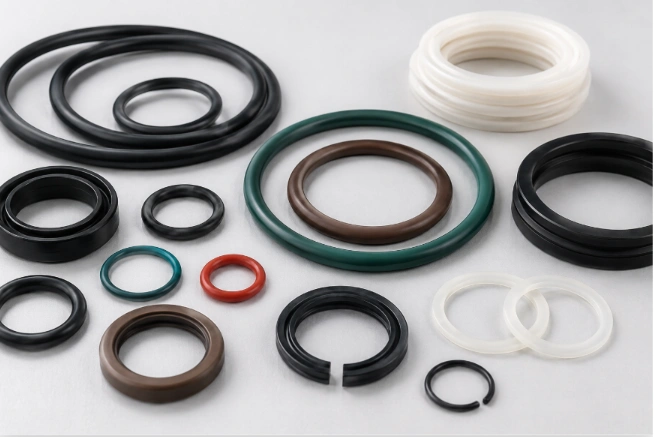
Industries That Rely on O Rings and Seals
The O ring and seal is used across virtually every process industry.
Chemical processing — pumps, reactors, and pipelines handling aggressive solvents, acids, and alkalis need chemically resistant seals such as PTFE encapsulated O rings or Viton.
Pharmaceutical — hygienic sealing with traceable, certified materials. FFKM and silicone O rings are common in sterile and clean-in-place systems.
Food and beverage — FDA-compliant O rings and seals prevent contamination in food contact equipment.
Oil and gas — high-pressure, high-temperature conditions require Viton and FFKM seals with strong mechanical performance.
Water treatment — EPDM O rings handle chlorinated water and ozone well, making them a standard choice in dosing and treatment systems.
Semiconductor — ultra-pure process environments use FFKM O rings that resist aggressive cleaning chemicals without contaminating the process.
How to Select the Right O Ring and Seal
Follow these steps before ordering any O ring and seal.
- Identify the process fluid and check chemical compatibility
- Confirm the operating temperature range minimum and maximum
- Check whether the application is static or dynamic
- Measure the groove dimensions accurately — shaft diameter, groove width, and depth
- Check if any regulatory certifications apply to your industry
- Consult a sealing specialist if conditions are aggressive or unusual
Getting these details right before selection saves time, money, and repeat failures.
Conclusion
At KAF Vulcan India, we supply a complete range of O rings and seals including PTFE encapsulated O rings, Viton O rings, FFKM seals, mechanical seals, and more. Our team supports engineers and procurement teams with application-based selection across chemical, pharmaceutical, food, oil and gas, and process industries. Contact us with your requirements and we will help you find the right sealing solution.
The O ring and seal is one of the smallest components in any industrial system, but its impact on performance is significant. Choosing the right material, type, and size for your specific application is what separates reliable long-term sealing from frequent failures and unplanned downtime.
FAQs
What is the difference between an O ring and a seal?
An O ring is a specific type of seal — a circular loop that creates a static or dynamic seal when compressed between two surfaces. A seal is a broader term covering all components that prevent fluid or gas leakage, including O rings, mechanical seals, gaskets, and lip seals.
Can the same O ring be used for both static and dynamic applications?
Standard O rings work well in static applications. For dynamic applications involving rotating or reciprocating shafts, mechanical seals or specifically designed dynamic O rings are recommended.
How do I know which O ring size to order?
Measure the groove inner diameter, groove width, and groove depth. Cross-reference these with standard O ring size charts. If in doubt, share your equipment details with a sealing supplier for confirmation.
What causes O ring and seal failure?
The most common causes are wrong material selection, incorrect sizing, dry running, chemical incompatibility, excessive temperature or pressure, and improper installation.
How long does an O ring last in industrial use?
Service life depends on the material, application, and operating conditions. A correctly selected and installed O ring typically lasts between one and three years in continuous industrial service. Aggressive conditions reduce this lifespan.
What is a PTFE encapsulated O ring used for?
A PTFE encapsulated O ring is used in applications where standard rubber O rings fail due to chemical attack. The outer PTFE layer resists most acids, solvents, and aggressive fluids, making it suitable for chemical, pharmaceutical, and food processing applications.
Which O ring material is best for chemical resistance?
PTFE encapsulated O rings and FFKM O rings offer the highest chemical resistance. For general acid and solvent applications, Viton o rings (FKM) is a reliable and cost-effective choice.