
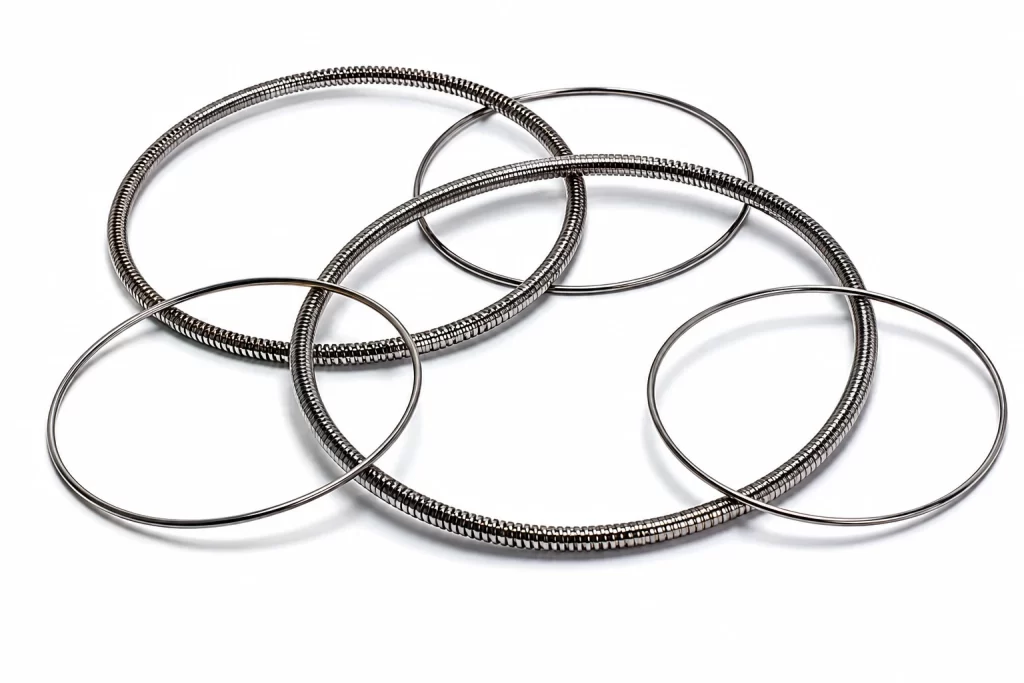
While much attention in industrial sealing focuses on high-temperature performance, an equally critical and often overlooked challenge is sealing in cold and sub-zero environments. Low-temperature O-rings are engineered to maintain flexibility, elasticity, and sealing force even in extreme cold, where standard elastomer O-rings can stiffen, crack, or lose their sealing ability entirely. As industries such as refrigeration, aerospace, cryogenic storage, and gas processing continue to push equipment into colder operating ranges, selecting the right O-ring material has become just as important as managing heat resistance.
What Are Low-Temperature O-Rings?
Low-temperature O-rings are seals manufactured from elastomer compounds specifically formulated to retain flexibility at sub-zero and cryogenic temperatures. Standard rubber compounds tend to harden and lose elasticity as temperatures drop, a phenomenon that can lead to seal failure well before the material’s rated minimum temperature is reached. Low-temperature O-rings, by contrast, are designed with a lower glass transition temperature the point at which a material shifts from flexible to brittle allowing them to continue sealing effectively even in freezing or cryogenic conditions.
Key benefits of low-temperature O-rings:
- Maintain elasticity and sealing force in sub-zero and cryogenic environments
- Resist hardening, cracking, and brittleness at low temperatures
- Provide consistent sealing performance across rapid temperature fluctuations
- Compatible with a range of core materials depending on application needs
- Help prevent leaks, contamination, and equipment downtime in cold-chain systems
Cryogenic O-Rings: Sealing at the Extreme End
At the more extreme end of the spectrum, cryogenic O-rings are designed for applications involving temperatures well below standard low-temperature ranges often down to -196°C or lower, such as in liquid nitrogen or liquid oxygen systems. These applications place enormous stress on sealing components, as most standard elastomers become too brittle to function at these temperatures.
Cryogenic sealing solutions often move beyond standard elastomers altogether, incorporating specialised compounds or encapsulated designs to maintain performance. Selecting the correct O-ring material for cryogenic use is critical a failure here isn’t just a maintenance issue but can pose serious safety risks in gas handling and storage systems.
Common applications for low-temperature and cryogenic O-rings:
- Refrigeration and HVAC systems
- Cold-chain storage and transportation equipment
- Aerospace and satellite systems
- Liquid gas (LNG, LOX, LIN) storage and transfer equipment
- Cryogenic research and laboratory equipment
- Food and beverage cold processing lines
Material Comparison for Cold-Temperature Sealing
| Feature | Standard Elastomer O-Rings | Low-Temperature O-Rings |
| Cold Flexibility | Poor below moderate cold | Excellent, retains elasticity |
| Risk of Cracking in Cold | Higher | Significantly lower |
| Typical Minimum Operating Temp | Around -20°C to -30°C | Down to -60°C or lower (material dependent) |
| Cryogenic Suitability | Not suitable | Suitable with appropriate compound selection |
| Sealing Consistency in Fluctuating Temps | Lower | Higher |
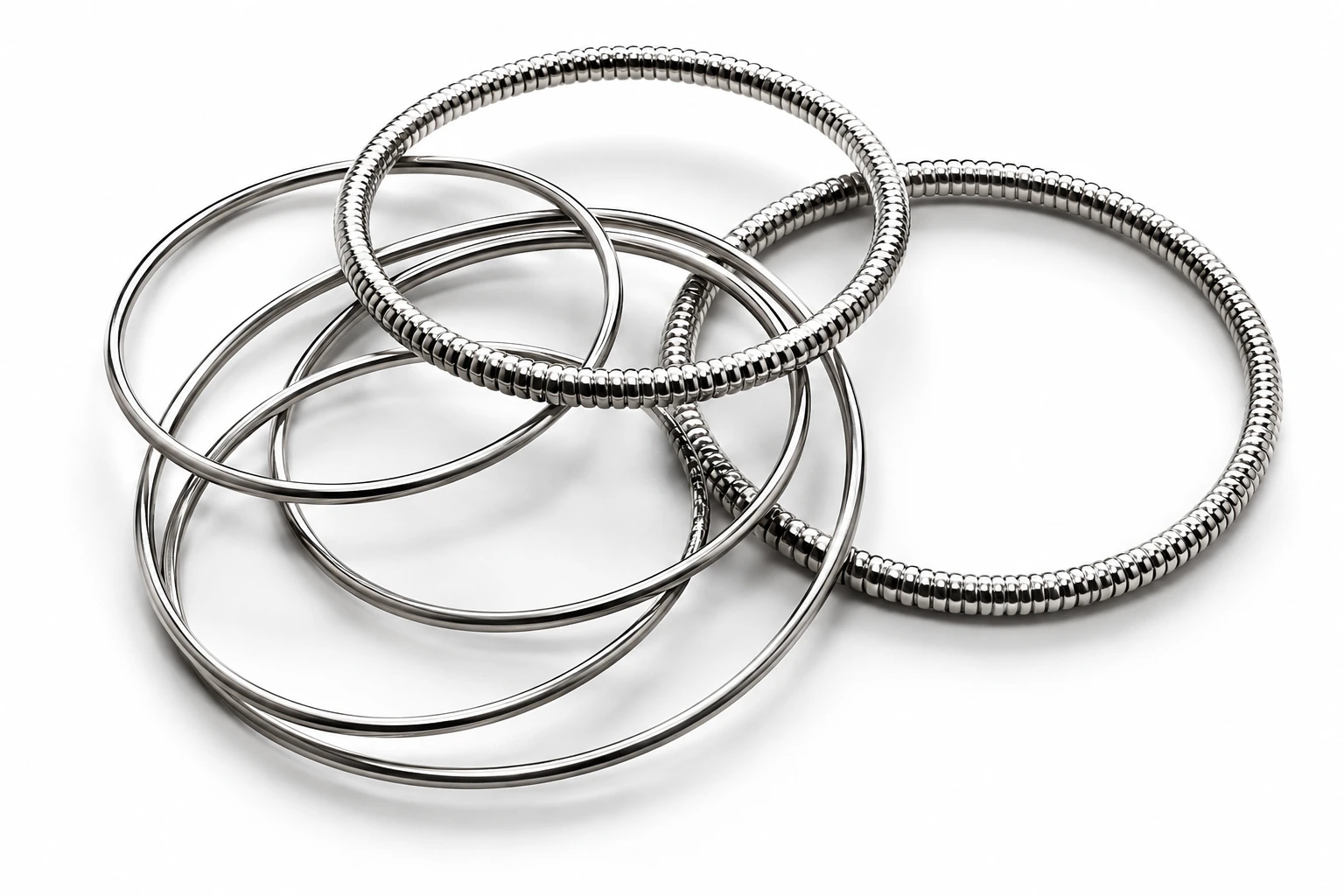
Choosing the right low temperature O-rings depends on your application. A few key factors should guide material selection
- Minimum operating temperature the seal will be exposed to, including any occasional cold excursions beyond normal operating range
- Chemical compatibility with the media being sealed, since cold performance alone isn’t sufficient if the material degrades on chemical exposure
- Thermal cycling requirements, particularly for systems that move between cold storage and ambient or elevated temperatures repeatedly
- Mechanical loading and pressure conditions, since cold environments can also affect an O-ring’s compression set behaviour over time
Working with a supplier who understands both the temperature range and the broader operating environment helps avoid under-specifying a seal that looks adequate on paper but fails prematurely in real-world cyclical or extreme-cold conditions.
O-Ring vs Seal: Understanding the Difference
While the terms “O-ring” and “seal” are often used interchangeably, they aren’t quite the same thing.
- O-ring: A specific type of seal a circular, ring-shaped component designed to sit in a groove and create a seal between two mating surfaces
- Seal: A broader term covering various sealing solutions, including gaskets, mechanical seals, gland packing, and encapsulated seals
In short, every O-ring is a seal, but not every seal is an O-ring. This distinction becomes particularly relevant in low-temperature and cryogenic applications, where the right sealing solution might not always be a standard O-ring a gasket, spring-energized seal, or specialised cryogenic seal design may be more appropriate depending on the joint configuration and operating conditions.
Installation and Handling Considerations for Cold Applications
Low-temperature O-rings require some additional care during installation and handling to ensure long-term performance:
- Allow for material contraction in cold environments. Groove and gland dimensions should account for the O-ring’s behaviour at operating temperature, not just at room temperature, since some contraction can occur in extreme cold.
- Verify chemical compatibility alongside temperature rating, since many cold-temperature applications such as LNG or refrigerant systems also involve exposure to specific process media.
- Consider cyclical service conditions, particularly in systems that move repeatedly between cold storage and ambient handling, as repeated thermal cycling can accelerate compression set over time.
Conclusion
Selecting the right O-ring and seal for low-temperature and cryogenic applications requires careful attention to material properties, minimum operating temperatures, and the broader mechanical and chemical demands of the system. Low-temperature O-rings help maintain reliable sealing performance in cold-chain, refrigeration, and gas-handling systems, while cryogenic-grade solutions are essential for the most extreme sub-zero environments. For expert guidance on selecting the right O-rings and seals for your specific cold-temperature application, our team at KAF Vulcan India is here to help you match the right material and design to your exact operating conditions.