FEP/PFA Encapsulated Hollow-Core Silicone O-rings
FEP/PFA Encapsulated Hollow-Core Silicone O-Rings
High-Performance Sealing for Extreme Chemical Environments
FEP/PFA encapsulated hollow-core silicone O-rings combine the outstanding chemical resistance of fluoropolymers with the flexibility and resilience of silicone elastomers. Designed for critical sealing applications, these O-rings deliver superior performance in environments where traditional elastomers fail.
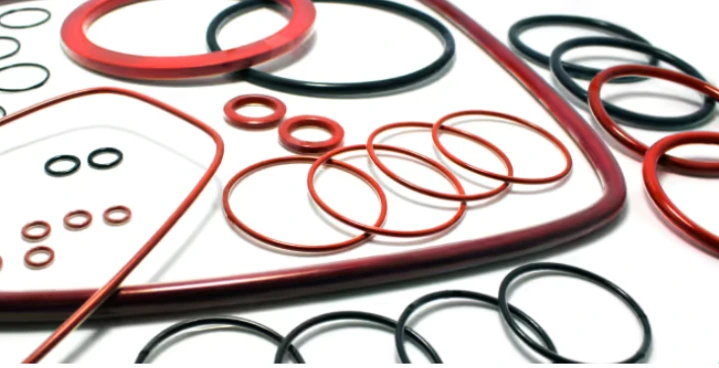
Applications for Hollow-Core FEP/PFA O-Rings
Hollow-core encapsulated O-rings are particularly well-suited for dynamic sealing applications where low friction, flexibility, and chemical resistance are critical. Their reduced compression force and smooth fluoropolymer surface make them a preferred choice over solid-core alternatives in moving systems.
Reciprocating Seals (Linear Motion Systems)
Used in pumps, valves, and cylinders where components move back and forth, hollow-core O-rings provide:
- Lower friction during motion
- Reduced wear on mating surfaces
- Consistent sealing with minimal force
Rotary Seals (Slow-Speed Applications)
In slow rotational systems such as mixers, agitators, and rotary unions:
- The non-stick FEP/PFA surface minimizes drag
- Hollow-core flexibility improves contact without excessive squeeze
- Helps extend seal life under light dynamic loads
Valve Stem Sealing
Ideal for control valves and dosing systems:
- Smooth surface prevents sticking or “stiction”
- Ensures precise movement and control
- Maintains sealing integrity with frequent cycling
Pump Applications (Low to Moderate Pressure)
Common in chemical and pharmaceutical pumps:
- Performs well in corrosive media
- Reduces frictional heat buildup
- Suitable for frequent start-stop operations
Semiconductor Wet Processing Equipment
In highly sensitive and clean environments:
- Chemically inert surface prevents contamination
- Low particle generation during motion
- Maintains seal integrity in aggressive fluids
Food & Pharmaceutical Processing Equipment
Used in dynamic joints and moving assemblies:
- Non-contaminating and easy-to-clean surface
- Performs reliably under repeated motion cycles
- Compatible with hygienic design requirements
Why Hollow-Core Excels in Dynamic Use
Compared to solid-core O-rings, hollow-core designs offer:
- Lower breakaway friction (reduced stick-slip effect)
- Better sealing under low compression loads
- Improved adaptability to movement and misalignment
- Easier installation in dynamic assemblies
Engineering Limits for Dynamic Applications
While hollow-core FEP/PFA encapsulated O-rings perform well in dynamic conditions, they are best suited for controlled operating ranges. Exceeding these limits can lead to premature wear, deformation, or seal failure.
Surface Speed (Rotary Applications)
- Recommended: Up to 0.5 m/s
- Intermittent operation: Up to 1.0 m/s (with lubrication)
Higher speeds may increase frictional heat and accelerate wear of the fluoropolymer jacket.
Reciprocating Speed (Linear Motion)
- Recommended: Up to 0.3 m/s
- Short-stroke / intermittent: Up to 0.5 m/s
Lower speeds help maintain seal integrity and minimize abrasion of the encapsulation.
System Pressure
- Recommended operating pressure: Up to 10 bar
- Maximum (static or low dynamic load): Up to 15 bar
Hollow-core designs are not intended for high-pressure sealing due to reduced structural support compared to solid-core O-rings.
PV Value (Pressure × Velocity)
- Recommended limit: ≤ 1.5 MPa·m/s
PV values above this range can result in:
- Excessive heat buildup
- Accelerated wear
- Potential deformation of the hollow core
Temperature Limits
- FEP encapsulated: -60°C to +205°C
- PFA encapsulated: -60°C to +260°C
Note: At higher temperatures, allowable speed and pressure should be reduced.
Compression (Squeeze)
- Recommended squeeze: 10% – 20% of cross-section
-
Avoid excessive compression, which can:
- Collapse the hollow core
- Increase friction
- Reduce service life
Important Design Considerations
To maximize performance in dynamic systems:
- Avoid sharp edges or rough sealing surfaces
- Ensure proper gland design and tolerances
- Minimize eccentricity and misalignment
- Use backup rings if extrusion risk exists
- Prefer slow-speed, low-load applications
When Not to Use Hollow-Core O-Rings
Hollow-core FEP/PFA O-rings are not recommended for:
- High-speed rotary sealing
- High-pressure hydraulic systems
- Heavy dynamic loads or shock conditions
- Applications requiring high extrusion resistance
- Prefer slow-speed, low-load applications
In such cases, spring-energized seals or solid-core alternatives may be more suitable.
For expert guidance on selecting the right O-rings and seals for your application, our team is on hand to help you match the ideal encapsulation type to your operating conditions and industry standards.
What Are Encapsulated Hollow-Core O-Rings?
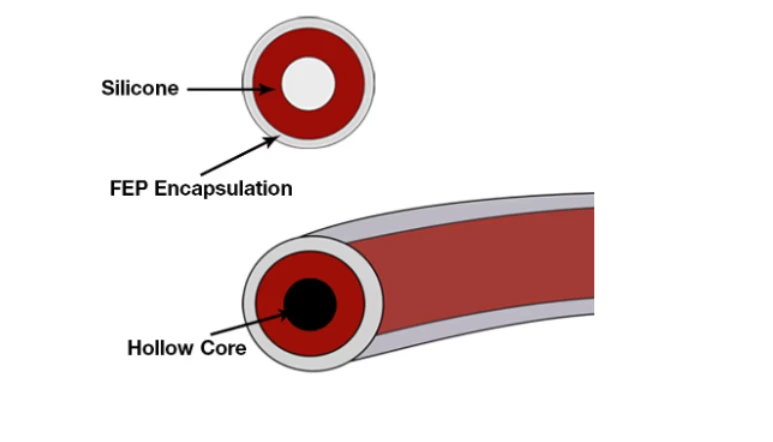
Encapsulated O-rings feature a seamless outer jacket made from FEP (Fluorinated Ethylene Propylene) or PFA (Perfluoroalkoxy) that fully encloses a hollow-core silicone elastomer. The hollow-core design provides:
- Lower compression force
- Enhanced flexibility
- Improved sealing at lower loads