
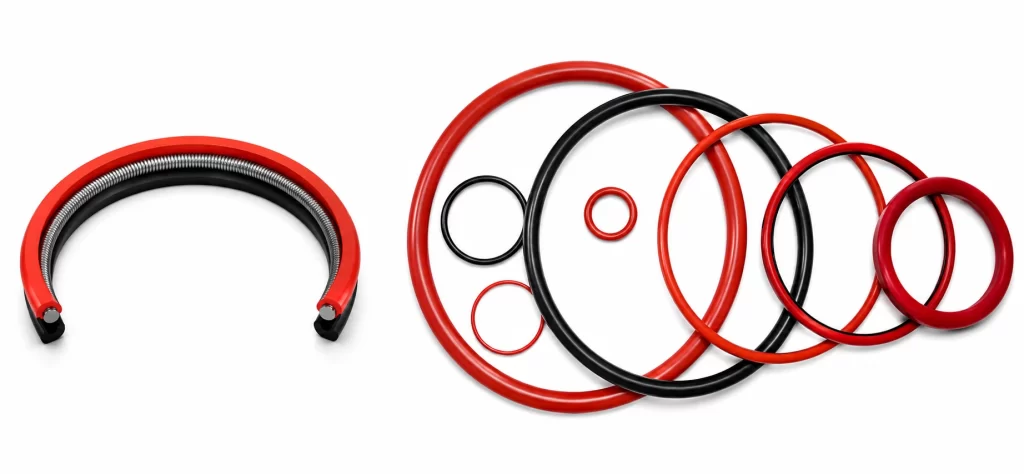
In industrial sealing applications, choosing the right O-ring material can be the difference between long-term reliability and premature failure. Standard elastomer O-rings, while cost-effective, often struggle in environments involving aggressive chemicals, extreme temperatures, or repeated thermal cycling. This is where PTFE encapsulated O-rings offer a proven solution combining the flexibility of an elastomer core with the chemical resistance and thermal stability of a PTFE outer layer. As industries continue to push equipment towards higher operating pressures, faster cycle times, and more aggressive process chemicals, the demand for sealing components that can reliably perform under these conditions has grown significantly.
What Are PTFE Encapsulated O-Rings?
PTFE encapsulated O-rings consist of an elastomer core commonly Silicone or Viton fully encased in a PTFE (or FEP/PFA) outer shell. This construction allows the O-ring to retain the elasticity and sealing force of the inner core while gaining the chemical inertness, low friction, and non-stick properties of PTFE on the surface. The result is a seal that performs reliably in environments where standard rubber O-rings would degrade quickly, crack, or lose their sealing force over time.
The manufacturing process typically involves moulding the PTFE shell around a pre-formed elastomer core, creating a seamless, protective barrier. This barrier is what gives encapsulated O-rings their unique combination of properties something neither a pure elastomer nor a pure PTFE O-ring could achieve on its own. A solid PTFE O-ring, for instance, lacks the elastic memory needed for effective sealing under fluctuating pressure, while a standard elastomer O-ring lacks the chemical inertness required in aggressive environments. Encapsulation bridges this gap.
Key benefits of PTFE encapsulation:
- Excellent chemical resistance across acids, solvents, and aggressive media
- Low-friction, non-stick surface for smoother installation and operation
- Retains elasticity and sealing force of the inner elastomer core
- Suitable for high-purity and contamination-sensitive environments
- Longer service life compared to standard rubber O-rings in harsh conditions
- Reduced maintenance and replacement frequency, lowering long-term operating costs
- Compatible with a wide range of mating materials and groove designs
PTFE Encapsulated Viton O-Rings
Among the various core materials used, Viton is a popular choice for PTFE encapsulation due to its excellent resistance to oils, fuels, and a wide range of chemicals. A PTFE encapsulated Viton O-ring combines Viton’s chemical resistance with PTFE’s inertness and smooth surface finish, making it ideal for demanding industries where both chemical exposure and consistent sealing performance are critical.
Viton itself is already known for strong performance in high-temperature and chemically aggressive environments, but encapsulating it in PTFE takes that performance further protecting the Viton core from direct exposure to the most corrosive media while still allowing it to provide the elastic sealing force needed at the joint. This makes PTFE encapsulated Viton O-rings a preferred choice where standard Viton O-rings would otherwise degrade prematurely.
Common applications:
- Oil & gas processing equipment
- Chemical processing plants
- Pharmaceutical manufacturing
- High-purity fluid handling systems
- Semiconductor and electronics manufacturing
- Food and beverage processing lines requiring contamination control
Why Choose O-Rings for High-Temperature and High-Heat Applications?
Not all O-rings are built to withstand extreme heat. Standard rubber compounds can lose elasticity, crack, or degrade when exposed to sustained high temperatures, leading to seal failure, leaks, and unplanned downtime. PTFE encapsulated O-rings are engineered to maintain sealing integrity across a wide temperature range, making them well-suited for:
- Steam systems and steam-traced piping
- Industrial ovens and furnaces
- High-temperature chemical processing lines
- Equipment with frequent thermal cycling
- Autoclaves and sterilisation equipment
- Heat exchangers and boiler systems
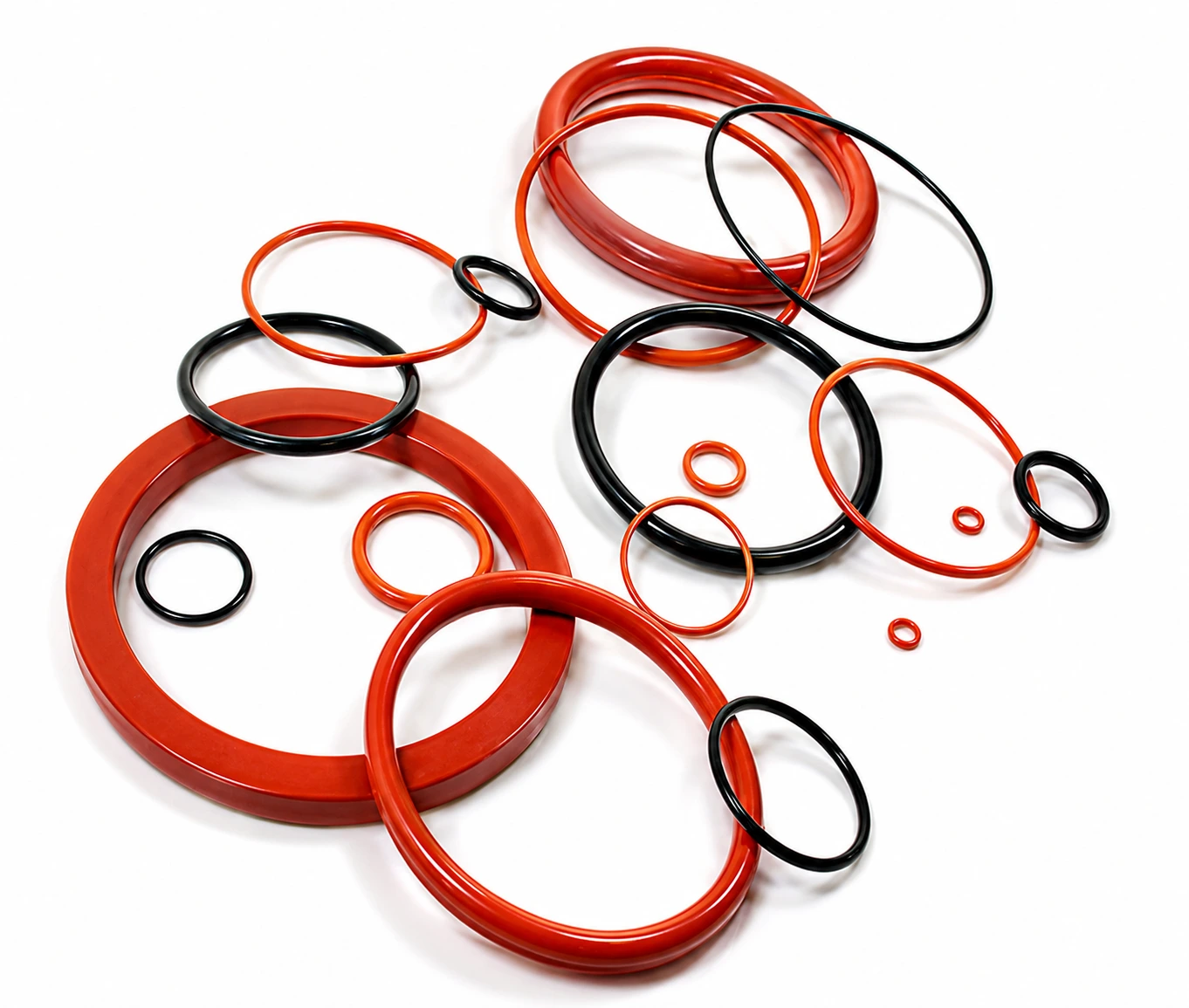
Beyond raw temperature tolerance, high-heat applications often involve repeated thermal cycling heating and cooling cycles that cause standard elastomers to fatigue over time. PTFE’s outer layer helps protect the core from this cyclical stress, extending the working life of the seal significantly compared to uncoated alternatives. This is especially valuable in acid-heavy environments, where PTFE encapsulated O-rings react best to sustained exposure without degrading, unlike standard elastomers that break down when repeatedly exposed to acidic media.
| Feature | Standard Rubber O-Rings | PTFE Encapsulated O-Rings |
| Chemical Resistance | Moderate | Excellent to Outstanding |
| Temperature Tolerance | Limited | High (varies by encapsulation type) |
| Surface Friction | Higher | Low, non-stick |
| Purity/Contamination Risk | Higher | Low — ideal for high-purity uses |
| Typical Lifespan in Harsh Conditions | Shorter | Longer |
| Maintenance Frequency | Higher | Lower |
| Cost | Lower upfront | Higher upfront, lower lifecycle cost |
Choosing the Right Encapsulation Type
Not all encapsulated O-rings are the same the choice between PTFE, FEP, and PFA encapsulation depends on your specific application requirements:
- PTFE encapsulation offers the broadest chemical resistance and is well-suited for general high-temperature, high-purity applications.
- FEP encapsulation provides excellent chemical resistance at a more economical price point, suitable for temperatures up to around 205°C.
- PFA encapsulation offers superior flexibility and the highest temperature tolerance, making it ideal for the most demanding, extreme-condition applications.
Working with a knowledgeable supplier can help ensure you select the encapsulation type that best matches your temperature range, chemical exposure, and mechanical requirements avoiding both under-specification (risking premature failure) and over-specification (unnecessary cost).
O-Ring vs Seal: Understanding the Difference
While the terms “O-ring” and “seal” are often used interchangeably, they aren’t quite the same thing.
- O-ring: A specific type of seal a circular, ring-shaped component designed to sit in a groove and create a seal between two mating surfaces
- Seal: A broader term covering various sealing solutions, including gaskets, mechanical seals, gland packing, and encapsulated seals
In short, every O-ring is a seal, but not every seal is an O-ring. Understanding this distinction of o rings helps in selecting the right component for a given application, whether you need a simple static seal, a dynamic sealing solution, or a specialised encapsulated design for extreme operating conditions.
Installation and Maintenance Considerations
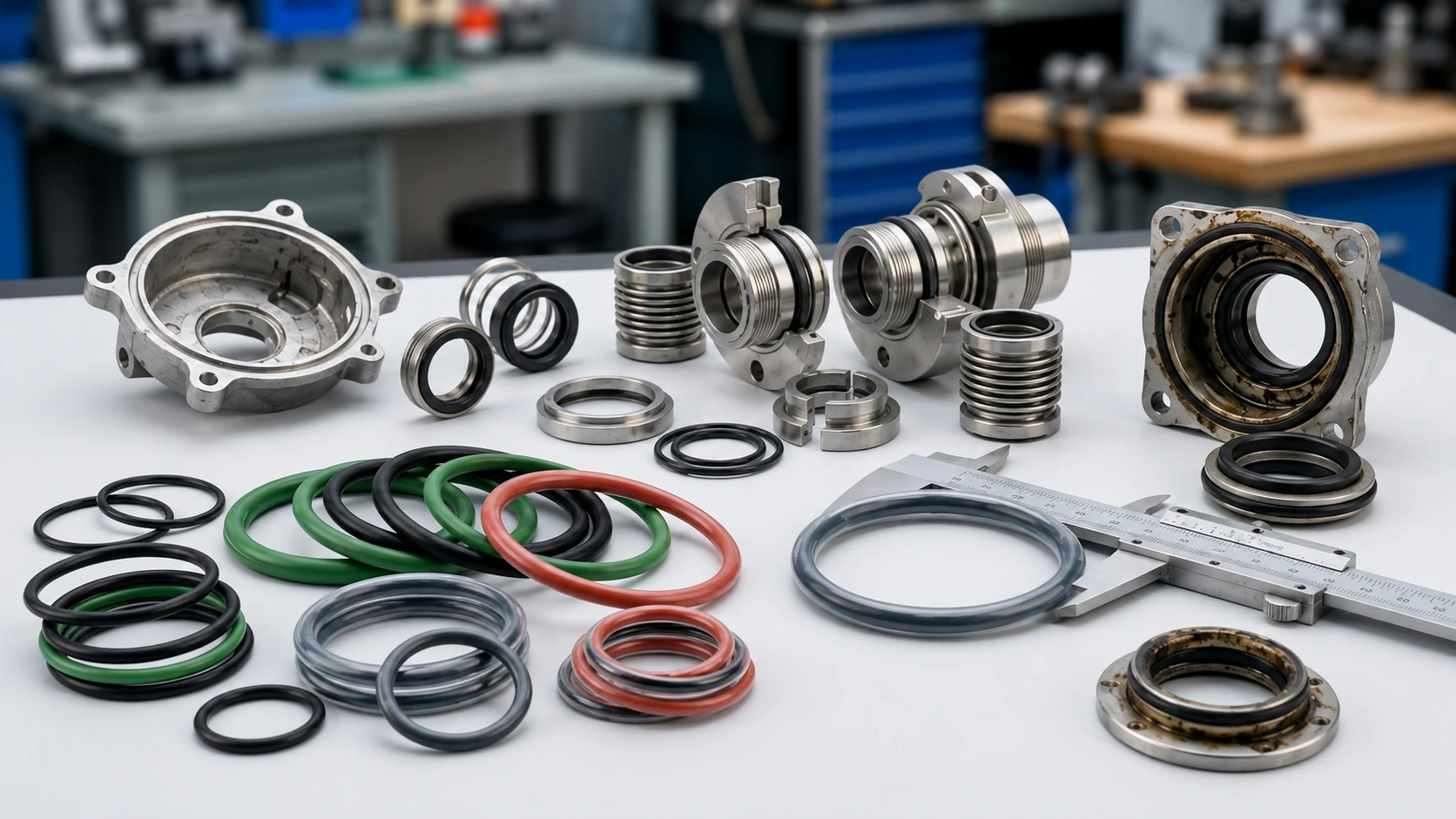
Even the best-engineered O-ring can fail prematurely if installed or maintained incorrectly. A few best practices help maximise the service life of PTFE encapsulated O-rings:
- Ensure groove dimensions match the O-ring specification precisely, since encapsulated O-rings are generally less forgiving of compression variance than standard elastomers
- Avoid over-compression, which can cause the PTFE shell to crack or split at the parting line
- Inspect for visible damage to the outer PTFE layer before installation, as any breach can expose the elastomer core to the process media
- Store O-rings away from direct sunlight and extreme temperatures prior to installation
- Follow manufacturer torque and assembly guidelines closely, particularly in flanged or bolted joint applications
- Avoid re-using encapsulated O-rings after disassembly, even if they appear undamaged. Once compressed and thermally cycled, the elastomer core’s ability to spring back and maintain sealing force may already be reduced, making a fresh O-ring the safer choice for critical applications.
Match the O-ring’s chemical and temperature rating to actual operating conditions, not just typical conditions. Process upsets, cleaning cycles (such as CIP/SIP in pharmaceutical or food-grade systems), and temporary excursions beyond normal operating ranges should also be factored into material selection, since these edge cases are often where seal failures originate.
Following these practices doesn’t just extend seal life it reduces the risk of unplanned downtime, product contamination, and costly rework, particularly in high-value or continuous-process industrial systems.
Conclusion
Selecting the right O-ring and seal for high-temperature, high-chemical-exposure applications requires understanding both material properties and application demands. PTFE encapsulated O-rings, including PTFE encapsulated Viton variants, offer a dependable balance of flexibility, chemical resistance, and thermal performance making them a preferred choice across demanding industrial environments, from chemical processing plants to high-purity pharmaceutical systems. For expert guidance on selecting the right O-rings and seals for your specific application, our team at KAF Vulcan India is here to help you match the right encapsulation type, material, and design to your exact operating conditions.