
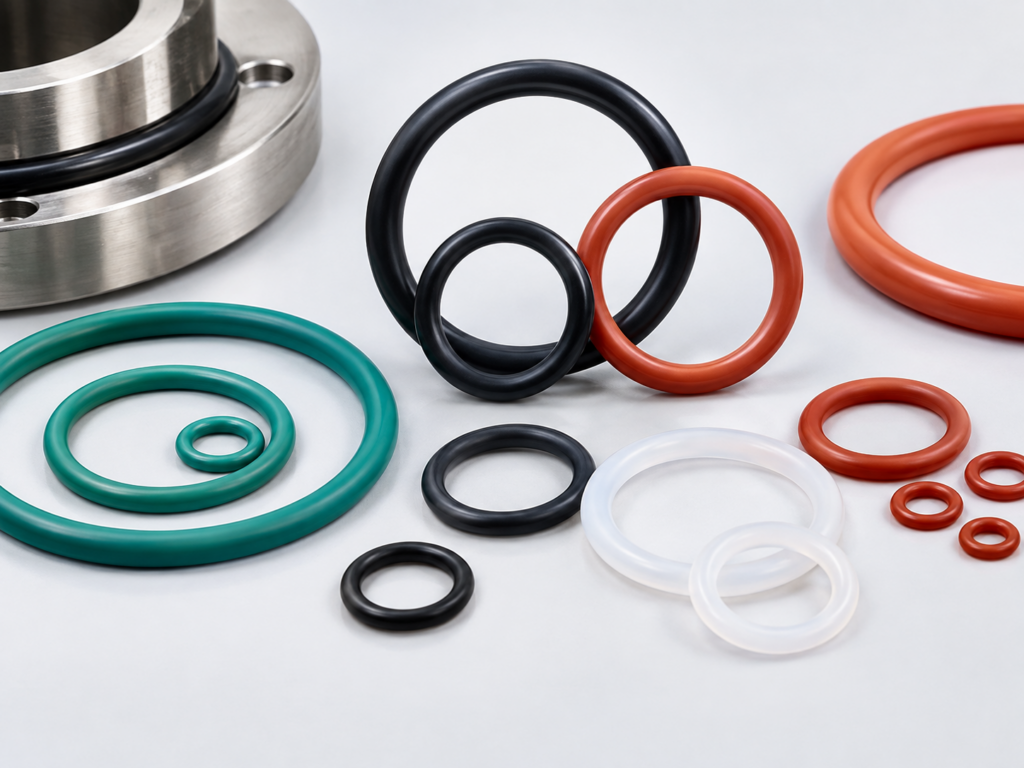
Choosing the right O-ring material is not only about finding a polymer that can handle heat. Temperature, pressure, media, movement, and sealing design all affect material choice. A seal that performs well in one process may not suit another.
For plant maintenance and engineering teams, this choice can also affect leakage risk, service life, and equipment downtime. That is why understanding high temperature O-ring materials is important before specifying a seal.
High temperature O-rings are used in pumps, valves, process equipment, reactors, piping systems, and other industrial machinery. Common material choices include FKM, FFKM, silicone, and other heat-resistant compounds.
Kaf Vulcan supports industrial sealing requirements with application-focused solutions. Their range covers different sealing materials and designs for demanding industrial environments.
What Makes An O-Ring Suitable for High Heat?
An O-ring must retain its sealing ability when exposed to elevated temperatures. Heat can change the hardness, elasticity, and physical properties of an elastomer. High heat O-rings are selected for equipment that operates under sustained or fluctuating heat conditions.
A suitable material should maintain its shape and recovery within the actual operating range of the equipment.
When reviewing high temperature O-ring materials, engineers should check:
- Continuous operating temperature
- Short-term temperature peaks
- Pressure conditions
- Static or dynamic sealing
- Chemical or process media
- Groove design and squeeze
- Exposure time at high temperature
- Compatibility with cleaning fluids
The highest temperature listed for a material should not be treated as an automatic design limit. Actual service conditions matter.
How Do FKM O-Rings Perform in High-Temperature Applications?
FKM O-rings are widely used where heat and chemical exposure are important considerations. FKM is a fluorocarbon elastomer known for its resistance to many oils, fuels, and industrial fluids.
It is often considered for:
- Pumps and valves
- Oil and gas equipment
- Chemical process systems
- Industrial machinery
- High-temperature fluid handling
- Static sealing applications
The exact performance depends on the FKM grade and the process conditions. Engineers should check the compound specification before selecting FKM O-rings for a specific service.
FKM can be a practical option when both heat resistance and fluid compatibility are required. However, it should not be selected based on temperature alone.
When Are FFKM O-Rings A Better Choice?
FFKM O-rings are used in applications where very high chemical resistance and demanding temperature conditions require a specialized elastomer.
They are commonly considered for critical process equipment and applications involving aggressive media. The material can provide a sealing option where standard elastomers may not meet the required combination of temperature and chemical resistance.
However, FFKM compounds can vary in their properties and operating limits. The correct grade must match the application.
Before specifying FFKM O-rings, engineers should review:
- Maximum continuous temperature
- Process chemicals
- Pressure
- Compression conditions
- Expected service cycle
- Required compliance specifications
This makes material selection more reliable than choosing a seal only because it has a high temperature rating.
Where Do Silicone O-Rings Fit into High-Heat Sealing?
Silicone O-rings are known for their useful temperature range and flexibility. They are often considered for applications where temperature changes are frequent.
They can be used in selected food, pharmaceutical, industrial, and process applications when the right compound and compliance specification are confirmed.
One advantage of silicone O-rings is their flexibility across a broad temperature range. However, silicone may not be the right choice for every chemical or high-pressure application.
Their suitability should be checked against:
- Operating temperature
- Process fluid
- Pressure
- Seal movement
- Surface finish
- Cleaning process
For this reason, silicone should be treated as one option within a wider material selection process.
How Do Other Heat-Resistant O-Rings Compare?
Not every high-temperature application need FKM, FFKM, or silicone.
Depending on the equipment, other elastomers or fluoropolymer-based sealing solutions may be considered. The correct choice depends on the balance between temperature, chemical exposure, pressure, and mechanical movement.
Heat resistant O-rings may be supplied in different compounds for different service conditions. A material that handles dry heat well may behave differently when exposed to steam, oils, solvents, or process chemicals.
The term heat resistant O-rings therefore describes a performance need rather than one single material.
Can The Same O-Ring Material Handle Low And High Temperatures?
A process may move between cold start-up conditions and high operating temperatures. This makes the full temperature cycle important.
Low temperature O-rings need to remain flexible enough to maintain contact with the sealing surfaces. A material that performs well at high heat may not offer the required flexibility during cold operation.
The same applies when equipment faces repeated temperature changes. Engineers should review both ends of the operating range instead of focusing only on the maximum temperature.
This is especially relevant for low temperature O-rings used in refrigeration, cryogenic systems, outdoor equipment, and process lines exposed to cold conditions.
What Should Engineers Check Before Choosing High Temperature O-Rings?
Material selection should start with the application rather than the O-ring itself.
For high temperature O-rings, the following checks can help narrow the choice:
- Temperature: Check continuous and peak temperatures.
- Media: Identify the exact fluid, gas, vapour, or cleaning agent.
- Pressure: Review operating and pressure-cycle conditions.
- Movement: Decide whether the seal is static, reciprocating, or rotary.
- Groove: Confirm groove size, squeeze, and surface finish.
- Compound: Check the exact grade instead of relying only on the polymer name.
- Compliance: Confirm any required food, pharma, or industry-specific specification.
These checks help prevent material selection based on temperature rating alone.
Why Does Seal Design Matter Alongside Material?
Even the right material can perform poorly if the seal design is unsuitable.
O-ring diameter, cross-section, groove dimensions, squeeze, surface finish, and installation method all affect sealing.
For example, excessive squeeze can create installation problems and increase stress on the seal. Poor groove preparation can damage the O-ring. Incorrect sizing can also lead to leakage.
That is why high temperature O-ring materials should always be considered as part of the complete sealing system.
The same approach applies when selecting heat resistant O-rings for existing equipment. The material and the gland design must work together.
How Can You Select the Right Material for Your Equipment?
A practical selection process can reduce trial and error. Mechanical seal manufacturers in India can also help engineers assess the sealing requirement when standard material selection does not provide a clear fit.
Start by recording the actual operating conditions. Include temperature, pressure, media, movement, and cleaning requirements.
Then compare suitable high temperature O-ring materials against those conditions. FKM may suit some heat and fluid applications. FFKM may be considered for more demanding chemical and temperature conditions. Silicone can suit selected applications where flexibility and temperature performance are important.
If the equipment also experiences very cold conditions, low temperature O-rings should be assessed as part of the same specification.
Match The Material to the Process
Material choice should always follow the application. Temperature is important, but it is only one part of the decision.
Kaf Vulcan provides industrial sealing solutions for different operating requirements and application conditions. Their engineering-focused approach helps buyers assess options based on the equipment and service environment.
For projects involving high temperature O-rings, FKM O-rings, FFKM O-rings, or silicone O-rings, they can help discuss the sealing requirement and suitable product specification. Teams can contact Kaf Vulcan to discuss their application or request a quote.