
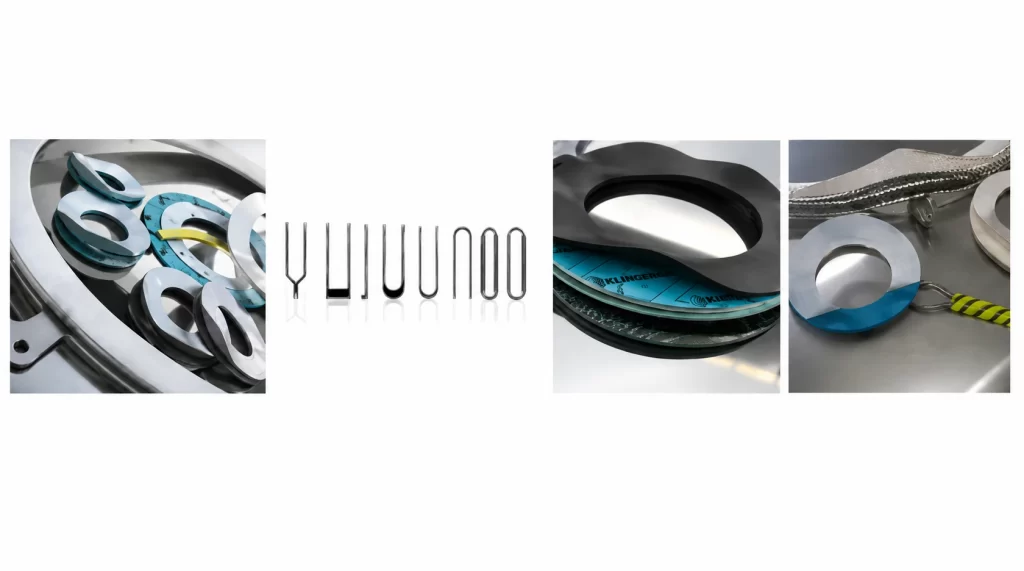
Industrial sealing plays a major role in keeping equipment safe, reliable, and efficient. In industries where aggressive chemicals, high temperatures, or sensitive products are involved, choosing the right sealing solution becomes even more important. Standard rubber gaskets may not always provide the required chemical resistance or service life. This is where PTFE envelope gaskets become a preferred choice.
These gaskets combine the chemical resistance of PTFE with the strength of a gasket insert. They are widely used in chemical processing, pharmaceutical manufacturing, food processing, and other industries that need reliable sealing. Kaf Vulcan provides engineered sealing solutions designed to meet the demands of these critical industrial applications.
Understanding PTFE Envelope Gaskets
PTFE envelope gaskets are composite sealing products made with an outer PTFE jacket that surrounds an internal gasket insert. The PTFE layer acts as a protective barrier against aggressive media, while the insert provides the compressibility and mechanical strength needed for effective sealing.
Unlike a standard encapsulated gasket, where an elastomer core is enclosed within a fluoropolymer layer, PTFE envelope gaskets use a specially selected gasket core that helps maintain sealing pressure under operating loads.
This combination offers both durability and chemical resistance, making these gaskets suitable for demanding industrial environments.
Why PTFE Is Preferred for Industrial Sealing
PTFE has become one of the most widely used materials in industrial sealing because of its unique properties.
Some of its key advantages include:
- Excellent resistance to many corrosive chemicals
- Low friction surface
- High resistance to moisture
- Suitable for clean process environments
- Good thermal stability across a wide operating range
- Low risk of product contamination
These characteristics allow PTFE envelope gaskets to perform reliably in applications where conventional gasket materials may degrade over time.
How PTFE Envelope Gaskets Are Built
The performance of these gaskets depends on their construction.
A typical PTFE envelope gaskets design includes:
- An outer PTFE envelope that meets the process media
- A carefully selected insert material that provides resilience
- Precision manufacturing to maintain dimensional accuracy
- Proper sealing geometry for different flange designs
The insert material may vary depending on pressure, temperature, and application requirements. This flexibility allows engineers to select a sealing solution that matches specific process conditions.
Industries That Depend on PTFE Envelope Gaskets
Many industrial sectors handle aggressive chemicals or require hygienic production environments. In these situations, sealing reliability directly affects plant safety and productivity.
Common applications include:
- Chemical processing plants
- Pharmaceutical manufacturing
- Food and beverage production
- Water treatment facilities
- Petrochemical operations
- Marine applications
- Process industries handling corrosive fluids
In these industries, PTFE envelope gaskets help reduce the risk of chemical attack on the sealing material while supporting consistent equipment performance.
What Makes Them Suitable for Critical Applications?
Critical industrial applications demand sealing solutions that can perform under challenging operating conditions.
Several factors make PTFE envelope gaskets a suitable option.
- Chemical Resistance
Many production facilities handle acids, alkalis, solvents, and other aggressive chemicals. The PTFE outer layer helps protect the gasket insert from direct exposure to these media.
- Reduced Product Contamination
Industries such as pharmaceuticals and food processing require clean manufacturing conditions. PTFE offers a non-reactive surface that supports product purity when used in suitable applications.
- Longer Service Life
Because the process media comes into contact with the PTFE layer instead of the insert, gasket life can often be improved when correctly selected and installed.
- Custom Manufacturing
Different industries require different flange sizes, operating pressures, and sealing requirements. Custom-manufactured PTFE envelope gaskets allow better compatibility with specialized equipment.
Factors To Consider Before Selecting A PTFE Envelope Gasket
Choosing the right gasket involves more than matching dimensions.
Engineers should evaluate:
- Chemical compatibility
- Operating temperature
- Pressure conditions
- Flange type
- Surface finish
- Bolt load
- Maintenance schedule
Working with experienced sealing specialists helps ensure the selected gasket meets the application’s performance requirements.
Installation And Maintenance Tips
Proper installation is just as important as product selection.
Good installation practices include:
- Inspect flange faces before installation.
- Clean all sealing surfaces thoroughly.
- Use the recommended tightening sequence.
- Avoid excessive bolt loading.
- Replace damaged gaskets instead of reusing them.
- Follow the equipment manufacturer’s installation guidelines.
Regular inspection also helps identify wear before it affects production or plant safety.
Supporting Reliable Industrial Sealing
Choosing the right sealing solution helps improve safety, reduce maintenance, and keep operations running smoothly. PTFE envelope gaskets provide excellent chemical resistance and reliable sealing, making them suitable for demanding industrial applications. Along with PTFE encapsulated Orings, Viton Oring, encapsulated gasket, and OEM mechanical seal products, they support a wide range of industrial sealing requirements.
KAF Vulcan provides engineered O-rings and sealing solutions for challenging industrial environments. As the official distributor of Vulcan Engineering Ltd. (UK & USA), the company supplies high-quality O-rings, seals, and other sealing products backed by expert technical support and customized solutions. Industries seeking reliable O-rings and seals can contact the team to discuss their requirements and find the right sealing solution for their application.