
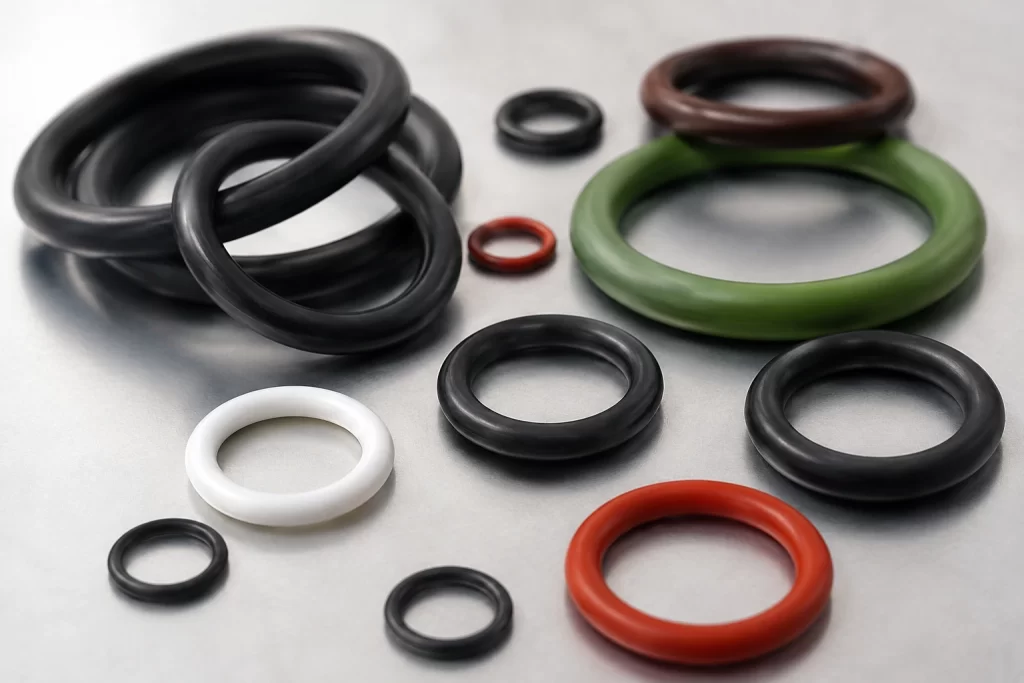
Heat is one of the most aggressive conditions for any sealing material. When elastomers are exposed to elevated temperatures for prolonged periods, their physical properties begin to change. Hardening, cracking, loss of elasticity, and permanent compression set are common symptoms of thermal degradation.
Selecting the right high-temperature O-ring material is therefore not simply a matter of choosing the highest temperature rating. It requires understanding the operating environment, chemical exposure, pressure levels, and whether the seal is static or dynamic.
Applications operating above 150°C require careful evaluation of material performance. Standard elastomers such as NBR are no longer suitable in these conditions. Instead, advanced compounds like FKM, FVMQ, Silicone, and FFKM must be considered.
Why Heat Causes Seal Failure
When elastomers are exposed to high temperatures, oxidation and molecular breakdown accelerate. The polymer chains begin to stiffen. As elasticity decreases, the O-ring loses its ability to recover after compression. Over time, this results in leakage.
Heat also intensifies chemical reactions. Fluids that might normally be harmless at room temperature can become aggressive at elevated temperatures. Therefore, temperature and chemical compatibility must always be evaluated together.
It is important to distinguish between peak temperature and continuous operating temperature. An O-ring may tolerate short spikes above its rating, but long-term exposure beyond its continuous limit will dramatically shorten service life.
Temperature Categories in Industrial Sealing
Understanding temperature ranges helps in narrowing down material selection.
| Temperature Range | Classification |
| Up to 120°C | Standard industrial range |
| 120°C – 150°C | Elevated temperature |
| 150°C – 200°C | High temperature |
| 200°C – 260°C | Very high temperature |
| Above 260°C | Extreme thermal environment |
Most high-temperature sealing challenges begin above 150°C.
Common High-Temperature O-Ring Materials
FKM (Fluorocarbon)
FKM, commonly known by the trade name Viton®, is one of the most widely used high-temperature elastomers. It provides strong resistance to oils, fuels, and hydrocarbons.
It performs reliably up to approximately 200°C, with some specialty grades reaching slightly higher temperatures. FKM is widely used in automotive engines, fuel systems, and oil & gas processing.
However, FKM has limitations in steam and hot water environments. Continuous exposure to hot steam can cause rapid degradation.
Silicone (VMQ)
Silicone O-rings offer excellent thermal stability and can perform in both high and low temperatures. They typically operate between -60°C and 200°C.
Silicone is frequently used in food processing, medical equipment, and static sealing environments where flexibility and temperature resistance are required.
Despite its heat tolerance, silicone has lower tear strength compared to FKM. It is not recommended for abrasive or high-pressure dynamic applications.
FVMQ (Fluorosilicone)
FVMQ combines the temperature flexibility of silicone with improved fuel resistance. It is often used in aerospace and fuel-handling systems.
Its operating temperature range is similar to FKM, typically up to 200°C. It performs better than silicone in hydrocarbon environments but does not match FKM in mechanical durability.
FFKM (Perfluoroelastomer)
FFKM is considered the premium solution for high-temperature and chemically aggressive environments. It offers temperature resistance up to approximately 260°C and, in some grades, even higher.
It provides exceptional resistance to nearly all chemicals, including strong acids and solvents. For semiconductor, pharmaceutical, and advanced chemical processing industries, FFKM is often the only viable elastomer choice.
The main limitation of FFKM is cost. It is significantly more expensive than other elastomers, but in critical systems, its longevity often justifies the investment.
Material Comparison at a Glance
| Material | Max Continuous Temp | Chemical Resistance | Steam Resistance | Cost Level |
| FKM | ~200°C | Excellent for oils & fuels | Moderate | Medium |
| Silicone | ~200°C | Moderate | Good | Medium |
| FVMQ | ~200°C | Good for fuels | Moderate | Medium-High |
| FFKM | ~260°C | Outstanding | Excellent | High |
This table simplifies comparison, but real-world selection depends on combined operating factors.
The Role of Chemical Compatibility
High temperature alone does not determine material performance. Chemical exposure plays an equally important role.
For example, FFKM o rings performs very well in hot oil environments but struggles in hot steam. Silicone handles temperature well but swells in fuels. FFKM offers the broadest chemical compatibility but comes at a premium cost.
When evaluating high-temperature O-rings, always consider the combined impact of heat and chemical media.
Pressure and Mechanical Stress Considerations
Elevated temperature reduces material hardness over time. Under pressure, this increases the risk of extrusion or permanent deformation.
High-temperature applications combined with high pressure may require:
- Harder durometer materials
- Backup rings
- Modified groove design
Failure to consider pressure can lead to premature leakage even when temperature ratings appear suitable.
Static vs Dynamic Sealing at High Temperatures
In static applications such as flanges or housings, material selection is more flexible. The O-ring remains compressed without significant movement.
In dynamic applications, such as rotating shafts or reciprocating pistons, friction and wear increase. Not all high-temperature materials perform equally well under motion.
FKM generally offers better dynamic performance than silicone. FFKM is excellent but must be evaluated for wear resistance depending on the compound grade.
When Encapsulated O-Rings May Be a Better Option
If the application involves both high temperature and aggressive chemicals, encapsulated O-rings may provide a more stable solution.
FEP-encapsulated O-rings typically handle temperatures up to 205°C, while PFA-encapsulated designs can reach approximately 260°C.
Encapsulation provides chemical resistance through a fluoropolymer jacket while maintaining internal elasticity through a silicone or FKM core.
These are generally recommended for static sealing environments where chemical attack is severe.
Signs of Thermal Seal Failure
Recognizing early warning signs helps prevent downtime.
Thermal degradation often appears as hardening, cracking, flattening, or loss of elasticity. Leakage after repeated heat cycles is another indicator that the material is not suitable for the operating conditions.
When these symptoms occur, reviewing material selection becomes necessary.
Selecting the Right High-Temperature O-Ring
Choosing the correct material requires evaluating several factors together:
- Continuous operating temperature
- Chemical exposure
- Pressure levels
- Type of movement
- Regulatory compliance requirements
- Expected service life
There is no single “best” high-temperature O-ring material. The correct choice depends entirely on the application.
Final Perspective
High-temperature sealing is a balance between thermal resistance, chemical stability, mechanical durability, and cost.
FKM provides reliable performance for oil and fuel systems. Silicone offers flexibility across temperature extremes. FVMQ is ideal for fuel-sensitive environments. FFKM delivers unmatched chemical resistance in the most demanding conditions.
Understanding the complete operating environment ensures long-term seal reliability and reduces maintenance costs.
Selecting the right high-temperature O-ring material is not about choosing the most expensive option. It is about choosing the most appropriate material for the specific conditions in which the seal must perform.